Finding an authentic Da Nang lantern in 2026 requires distinguishing handcrafted pieces with bamboo frames and silk covers from plastic imports that quickly degrade. This guide provides specific locations, inspection criteria, and practical advice for acquiring a genuine, high-quality souvenir.
An authentic Da Nang lantern is characterized by a hand-shaped bamboo frame, a natural fabric cover (silk or cotton), and hand-painted or hand-applied details. Mass-produced imports often feature plastic frames and synthetic fabric with printed patterns. Prices for authentic lanterns typically range from $8 for a simple 20cm model to $35 for a 40cm hand-painted artisan piece. Comparison shopping across at least three vendors is recommended before purchasing.
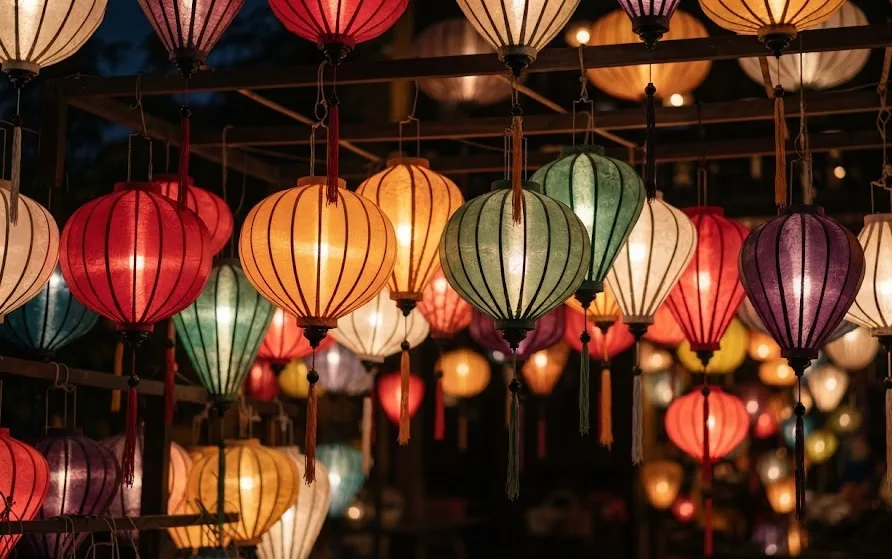
What Makes a Da Nang Lantern Authentic — and Why It Matters
An authentic lantern is handmade, utilizing bamboo, natural fabric, and hand-applied decoration. The craft tradition in central Vietnam has been preserved through generations, and the distinction between a genuine artisan piece and a factory import is readily apparent upon close inspection.
The Difference Between Hoi An and Da Nang Lantern Craft Traditions
While Hoi An and Da Nang are geographically close, their lantern traditions exhibit notable differences. Hoi An lanterns are generally more decorative, often made with silk stretched over bamboo frames, and are closely associated with the monthly lantern festival. Da Nang lanterns, conversely, stem from a more utilitarian heritage, originally serving as functional lighting for homes and boats before evolving into popular souvenirs.
When shopping in Da Nang, you will encounter many lanterns designed in the Hoi An style due to their market appeal. However, for a piece reflecting genuine Da Nang character, seek simpler designs with robust bamboo construction and more subdued color palettes, which align with the city’s working-class lantern history rather than the festival-driven tourism trade.
Silk, Bamboo, and Hand-Painted Details: The Hallmarks of a Genuine Piece
Three physical attributes differentiate an authentic lantern from a replica. Firstly, the frame: genuine bamboo frames are hand-split and shaped while pliable, then secured with string or thin wire. Slight variations in the bamboo slats are indicative of handwork. Secondly, the cover: real silk possesses a subtle sheen that shifts with light, while cotton offers a matte, soft texture. Synthetic fabrics feel slick and often exhibit a plastic-like texture under direct illumination.
Thirdly, the decoration: hand-painted patterns reveal variations in brushstrokes, indicating manual application. Printed patterns are flat, perfectly symmetrical, and lack any discernible brush texture. A simple test involves running a finger over the painted area; hand-painted designs will have a slight raised texture, whereas printed ones will be completely smooth.
How to Spot a Mass-Produced Import Before You Pay
Imported lanterns, predominantly manufactured in China, are prevalent in tourist markets throughout Vietnam. Their lower production cost is attributed to the use of metal wire or plastic frames, synthetic fabric, and machine-printed patterns. Common indicators of imported lanterns include perfectly uniform frame spacing, polyester-like fabric, and identical patterns across multiple items.
Here’s a comparison table to aid in quick identification:
| Feature | Authentic Handmade Lantern | Mass-Produced Import |
|---|---|---|
| Frame material | Hand-split bamboo, slight irregularities | Metal wire or plastic, perfectly uniform |
| Cover fabric | Real silk or cotton with natural texture | Synthetic polyester, slick to the touch |
| Patterns | Hand-painted, visible brush texture | Machine-printed, flat and perfectly symmetrical |
| Weight | Noticeably light due to hollow bamboo | Heavier due to metal or plastic frame |
| Price | $8–35 depending on size and detail | $3–8 at tourist stalls |
Where to Buy Authentic Lanterns in Da Nang: A 2026 Street-by-Street Guide
The primary locations for purchasing authentic lanterns in Da Nang are Han Market, Con Market, and the artisan workshops on Cam Kim Island. Each venue offers a distinct combination of price, quality, and authenticity.
Han Market and Con Market: What to Look For (and Skip) at Tourist Stalls
Han Market, situated in the city center near the Han River, is a convenient source for lanterns. Prices generally range from $5–8 for a 20cm lantern and $10–15 for a 30cm piece. However, many stalls offer a mix of authentic and imported lanterns, necessitating careful inspection using the frame and fabric tests.
Con Market, located on the western side of the city, caters less to tourists and typically features slightly lower prices. While the lantern selection is smaller, the quality tends to be more consistent as vendors serve a local clientele familiar with the craft. Visiting Con Market first can establish a baseline for authentic lanterns and fair pricing before proceeding to Han Market, where a wider selection is available but requires greater scrutiny.
The Artisan Workshops of Cam Kim Island — Worth the Short Boat Ride?
Cam Kim Island, accessible via a short boat trip from Hoi An, hosts several family-run lantern workshops that supply lanterns to shops across central Vietnam. The island has gained popularity among travelers seeking authentic crafts, and its workshops offer a high degree of product authenticity. Most workshops welcome visitors, allowing observation of the artisans at work and direct sales at prices 20–30% lower than market rates.
The logistical considerations include travel time. Reaching Cam Kim involves a boat journey, and while some workshops provide transport from Hoi An, arranging transport from Da Nang requires approximately a 45-minute drive plus the boat crossing. For those already planning a day trip to Hoi An, incorporating Cam Kim is straightforward. For visitors solely in Da Nang, the trip is advisable only for those purchasing multiple lanterns or seeking custom designs.
Hidden Lantern Shops on Bach Dang Street and the Han Riverside
Bach Dang Street, lining the Han River, features several small shops selling lanterns alongside other local crafts. These establishments are less tourist-oriented than Han Market, and their owners are often the artisans themselves or their family members. The selection is more curated, with a higher likelihood of finding unique designs, including folding lanterns specifically intended for travelers.
Prices in these shops are typically higher than at the markets, ranging from $10–20 for a 30cm lantern. However, the quality is more consistent, and minor customizations, such as different tassel colors or specific patterns, may be accommodated. Shops displaying lanterns outside their entrances, rather than stacked on tables, generally indicate a focus on craftsmanship over mass inventory.
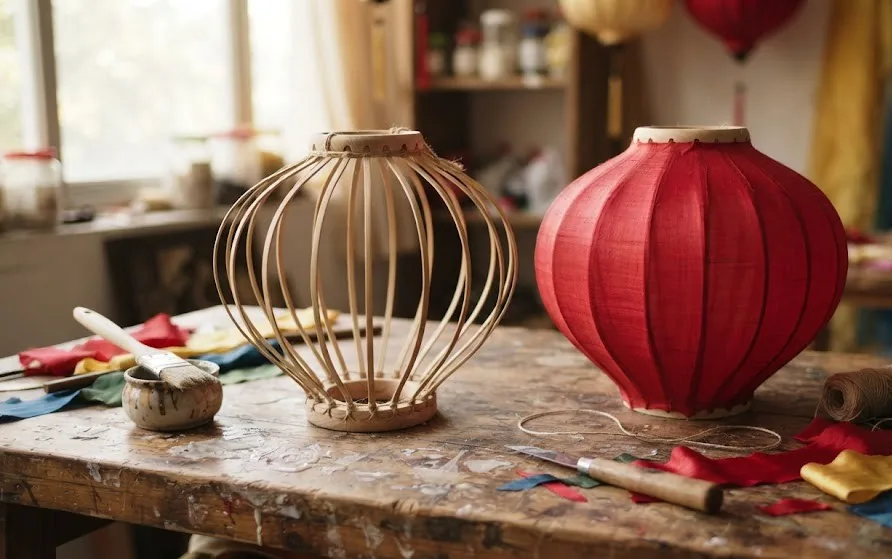
What to Look For When Buying: A Practical Checklist for 2026
Before making a purchase, conduct a five-point inspection. This brief process helps avoid common traveler errors.
- Frame test: Gently squeeze the frame. Bamboo exhibits slight flexibility and returns to its shape; metal or plastic does not.
- Fabric feel: Rub the cover between your fingers. Silk and cotton have a natural feel; synthetic materials feel slick.
- Paint check: Run a fingernail across a painted area. Hand-painted designs have slight texture; printed patterns are flat.
- Joint inspection: Examine where the fabric attaches to the frame. Handmade pieces show visible stitching or glue marks; imports appear uniformly finished.
- Folding test: If portability is a concern, inquire about folding capabilities. Authentic bamboo frames can be designed to collapse; wire frames typically cannot.
Frame Material: Bamboo vs. Metal Wire — Which Holds Up Over Time?
Bamboo frames offer superior longevity. A well-constructed bamboo frame, when properly treated, can endure for years as a decorative item. Bamboo’s natural flexibility allows it to absorb minor impacts without breaking, a crucial factor for transport. Metal wire frames, common in cheaper imports, are more rigid and susceptible to permanent bending if the lantern is compressed during transit.
Metal wire frames are lighter, which can be an advantage for very large lanterns. However, for lanterns under 50cm, the weight difference is minimal. Bamboo frames are generally preferable unless acquiring an exceptionally large decorative piece intended for stationary display.
Fabric Quality: Real Silk, Cotton, or Synthetic? The Touch-and-Light Test
The fabric texture serves as a reliable indicator of authenticity. Real silk displays a distinctive sheen that changes with light angle. Tilting the lantern near a light source will reveal this characteristic. Silk also feels warm to the touch and has a subtly irregular texture. Cotton is matte and softer, with a more uniform but still natural feel.
Synthetic fabric, typically polyester, feels cool and slick. Under direct light, it may exhibit a faint plastic sheen. Holding the lantern towards a bright light source highlights the difference: silk diffuses light softly and evenly, creating a warm glow, while polyester produces harsher light with visible hotspots.
Hand-Painting vs. Printed Patterns: How to Tell the Difference
Hand-painted lanterns possess a unique character absent in printed versions. Observe the pattern edges: hand-painted designs have slightly uneven borders where the brush lifted, while printed patterns exhibit sharp, uniform edges. Running a finger over the painted area reveals a subtle raised texture in hand-painted designs, whereas printed surfaces are entirely flat.
Color depth also provides clues. Hand-painted lanterns show variations in color intensity based on paint application. Printed lanterns display uniform color. For intricate designs, examine fine details: hand-painted pieces show individual brushstrokes, while printed ones resemble a transferred photograph.
Size, Shape, and Folding: What Travelers Actually Pack and Carry Home
For travelers, a folding lantern is highly practical. Traditional round lanterns, while aesthetically pleasing, are cumbersome for transport. A 40cm lantern occupies significant luggage space and is prone to damage. Folding lanterns, which collapse flat by disengaging the bamboo frame, resolve this issue. They are available in most artisan shops and typically cost only $2–3 more than non-folding versions of comparable size.
A folding lantern under 30cm in diameter can easily fit into a backpack or carry-on suitcase. For checked luggage, a 40–50cm folding lantern can be transported within a cardboard tube or cushioned by soft clothing. Larger lanterns, exceeding 50cm, are best shipped or hand-carried in specialized bags due to their size and fragility.
How Much Should You Pay? Lantern Pricing in Da Nang for 2026
Expect to pay between $5 and $35 for an authentic lantern in Da Nang, contingent on size, material, and point of purchase. Street stalls and markets generally offer lower prices, while artisan workshops and riverside boutiques command higher prices for guaranteed authenticity and craftsmanship.
Price Ranges by Size and Material — From Street Stalls to Artisan Studios
The following pricing breakdown for 2026 reflects current market observations from Han Market, Con Market, Bach Dang Street, and Cam Kim Island workshops:
| Size | Material | Market Stall Price | Artisan Workshop Price |
|---|---|---|---|
| 20cm (small) | Synthetic fabric, wire frame | $3–5 | Not typically sold |
| 20cm (small) | Silk, bamboo frame | $5–8 | $8–12 |
| 30cm (medium) | Cotton, bamboo frame | $8–12 | $12–18 |
| 30cm (medium) | Silk, bamboo frame, hand-painted | $12–15 | $18–25 |
| 40cm (large) | Silk, bamboo frame, hand-painted | $15–20 | $25–35 |
| 50cm+ (extra large) | Silk, bamboo frame, custom design | $25–35 | $40–60 |
Negotiation Tips: When to Bargain and When to Pay the Sticker Price
Bargaining is customary at Han Market and Con Market, where initial prices may be inflated by 20–30%. A polite negotiation, involving a friendly demeanor and a counteroffer around 70% of the asking price, typically results in a final price of 80–85% of the original. Aggressive bargaining is discouraged, as the local custom emphasizes mutual agreement.
At artisan workshops and riverside boutiques, prices are generally fixed and reflect the value of the craftsmanship. Attempting to bargain in these settings may be counterproductive. If a price seems too high, it is advisable to politely decline and seek other options. A reasonable request for a 10% discount may be considered when purchasing three or more lanterns at any location.
Why the Cheapest Lantern on the Shelf Is Rarely the Best Buy
A $3 lantern may appear inexpensive, but it is likely an imported item with synthetic materials that will degrade quickly. The cost of authentic materials and handcrafted construction inherently leads to higher prices for genuine lanterns.
A $12 silk lantern with a bamboo frame, if properly maintained, can serve as a lasting memento of Vietnamese craft. In contrast, a low-cost import may have a limited lifespan. The marginal price difference represents a significant investment in quality and authenticity, ensuring a souvenir that holds lasting value and tells a story.
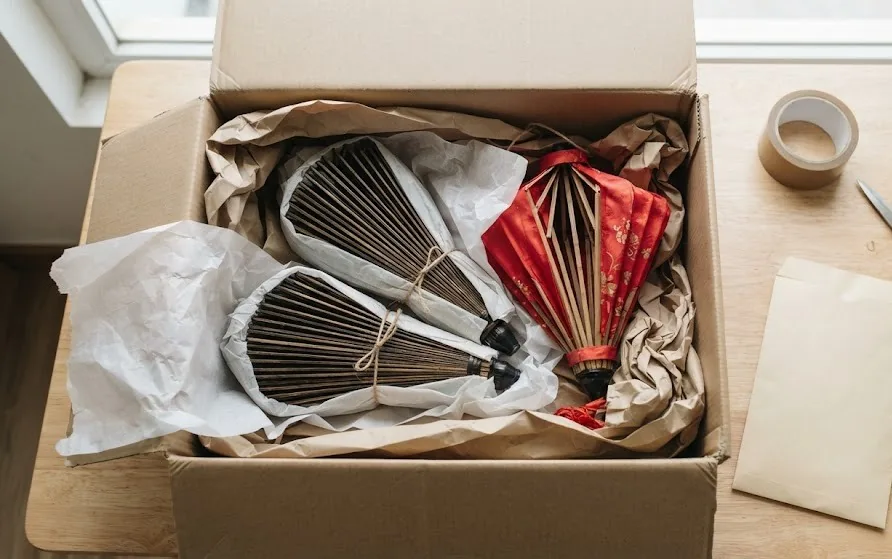
How to Transport Your Lantern Home Without Breaking It
Proper packing techniques, particularly selecting a folding design and protecting the frame, are essential for transporting a lantern safely. The following method is effective for both carry-on and checked luggage.
Folding Lanterns: Which Designs Collapse Flat for Luggage?
Folding lanterns utilize bamboo frames with hinged joints that allow for flat collapse. Vendors can demonstrate the folding mechanism; a well-made folding lantern should operate smoothly. Common folding designs include the classic round and oval lanterns, which reduce to approximately 10% of their expanded volume.
Not all lanterns are foldable, and this feature may not be explicitly stated. If packing is a consideration, inquire about folding capabilities. For non-folding lanterns, hand-carrying, shipping, or accepting the risk of damage in checked luggage are the primary options.
Packing Materials: Bubble Wrap, Cardboard Tubes, and Carry-On Rules
For a folding lantern, collapse the lantern flat and wrap it in bubble wrap. Place the wrapped lantern centrally within your suitcase, cushioned by soft clothing. For enhanced protection, insert the wrapped lantern into a cardboard tube before packing.
For non-folding lanterns, a rigid cardboard tube or a specialized lantern bag is recommended. These can be purchased at some shops on Bach Dang Street. The tube should be slightly larger than the lantern’s diameter, with bubble wrap filling the space between the lantern and the tube walls.
Shipping vs. Carrying: What Airlines Allow in 2026
For carry-on luggage, a collapsed folding lantern measuring under 55cm in its longest dimension typically complies with airline size restrictions. A 30cm folding lantern, when collapsed, measures approximately 30cm x 30cm x 5cm, fitting easily into most carry-on bags. Non-folding lanterns generally exceed carry-on dimensions and must be checked or shipped.
Checked luggage does not have specific restrictions for lanterns, but the risk of damage is higher. If checking a lantern, utilize the cardboard tube method and pack it centrally within the suitcase, surrounded by soft items. Shipping is the most secure option for large or fragile pieces. Many shops on Bach Dang Street and Cam Kim Island offer international shipping services, with costs ranging from $20–40 and delivery times of 2–6 weeks. Confirm shipping prices and estimated delivery times, and inquire about protective packaging.
Common Buying Mistakes and How to Avoid Them
Three frequent errors lead to traveler dissatisfaction when purchasing lanterns in Da Nang. Awareness of these pitfalls can prevent unnecessary expense and frustration.
Mistake #1: Assuming Every Lantern in Da Nang Is Locally Made
While Vietnamese lantern craft is established, the market also includes imported goods. A significant number of lanterns sold in tourist areas are manufactured in China due to lower production costs. Vendors often sell what is popular, and many travelers may not discern the difference.
The solution: employ the frame and fabric tests. Metal or plastic frames, synthetic fabric, or printed patterns indicate an imported item. These simple checks, taking only seconds, help avoid overpaying for mass-produced goods.
Mistake #2: Ignoring the Frame Until It Warps a Week Later
Bamboo frames that are not adequately dried or treated can warp when exposed to humidity changes, a common issue when traveling from a tropical climate to a drier one. This can result in a lantern that appears perfect at purchase but develops frame distortions shortly after arrival.
The solution: inspect frame joints carefully before buying. Look for signs of cracking, splitting, or uneven gaps between bamboo slats. Inquire if the bamboo was kiln-dried, a process common in artisan workshops that helps prevent warping. While kiln-dried frames may incur a slightly higher cost, they offer greater stability.
Mistake #3: Overpaying Because You Skipped the Comparison Walk
Price discrepancies of 30–50% for identical lanterns can exist between the first stall visited and subsequent ones. Travelers who purchase at the initial vendor often overpay due to a lack of price comparison.
The solution: incorporate comparison shopping into your plan. Visit at least three lantern sellers, including different stalls at Han Market, a shop on Bach Dang Street, and ideally an artisan workshop. Document lanterns of interest, note prices, and then make an informed decision. This comparative approach can yield savings of $5–15 per lantern.
Related on this site
- Da Nang’s Best French Bakeries: Croissants and Baguettes 2026
- Da Nang’s Best Farmers Markets: Fresh Produce and Local Delights
- Da Nang’s Unique Souvenir Ideas: Handcrafted Gifts and Crafts 2026
Frequently Asked Questions
Are Da Nang lanterns the same as Hoi An lanterns?
While similar in style, they are not identical. Hoi An lanterns are typically more decorative, often using silk and elaborate patterns associated with the town’s festival tourism. Da Nang lanterns originate from a more utilitarian background, originally serving as functional lighting, and tend to feature simpler designs and sturdier bamboo construction. Both styles are commonly sold in both cities, so focus on quality indicators like bamboo frames, natural fabric, and hand-painting.
Can I bring a lantern on a plane as carry-on luggage?
Yes, provided it is a folding lantern that collapses to fit within standard carry-on size limits (typically 55cm x 40cm x 23cm). A 30cm folding lantern, when collapsed, measures approximately 30cm x 30cm x 5cm, fitting easily into a backpack or carry-on suitcase. Non-folding lanterns generally exceed carry-on dimensions and must be checked or shipped.
What is the best time of year to buy lanterns in Da Nang?
Lanterns are available year-round. However, the selection is often best and prices may be more favorable in the period leading up to Tet (Lunar New Year, typically late January or February), when demand is high and artisans produce their finest work. During the summer months (June–August), tourist markets offer good selection, but fewer artisan workshops may be operating at full capacity. The Hoi An Lantern Festival, held on the 14th day of each lunar month, provides an excellent opportunity to see lanterns in their cultural context, though prices in Hoi An may be elevated on festival days.
Do lantern shops in Da Nang offer shipping or international delivery?
Yes, many shops on Bach Dang Street and artisan workshops on Cam Kim Island provide international shipping services. Costs typically range from $20–40 depending on the destination and package size, with delivery times varying from 2–6 weeks. Some vendors utilize express couriers for faster, albeit more expensive, delivery. Always confirm shipping costs and estimated delivery times before purchasing, and inquire about protective packaging.
Conclusion
Acquiring an authentic Da Nang lantern hinges on understanding genuine craftsmanship, identifying appropriate shopping locations, and ensuring fair pricing. Utilize the frame and fabric tests to distinguish handmade items from imports, compare prices across multiple vendors, and engage with sellers about their materials and processes.
Before your shopping excursion, consider this action plan:
- Begin at Con Market to observe authentic lanterns at local prices, then compare with Han Market for a broader selection.
- Inspect each lantern thoroughly using the five-point checklist: frame, fabric, paint, joints, and folding mechanism.
- Opt for a folding lantern under 40cm for convenient transport, and pack it securely with protective cushioning.
A thoughtfully selected lantern transcends a mere souvenir; it represents a piece of Vietnamese craft that can illuminate your home and evoke memories of Da Nang’s riverside ambiance for years to come.
Part of our guide to things to do in Da Nang.