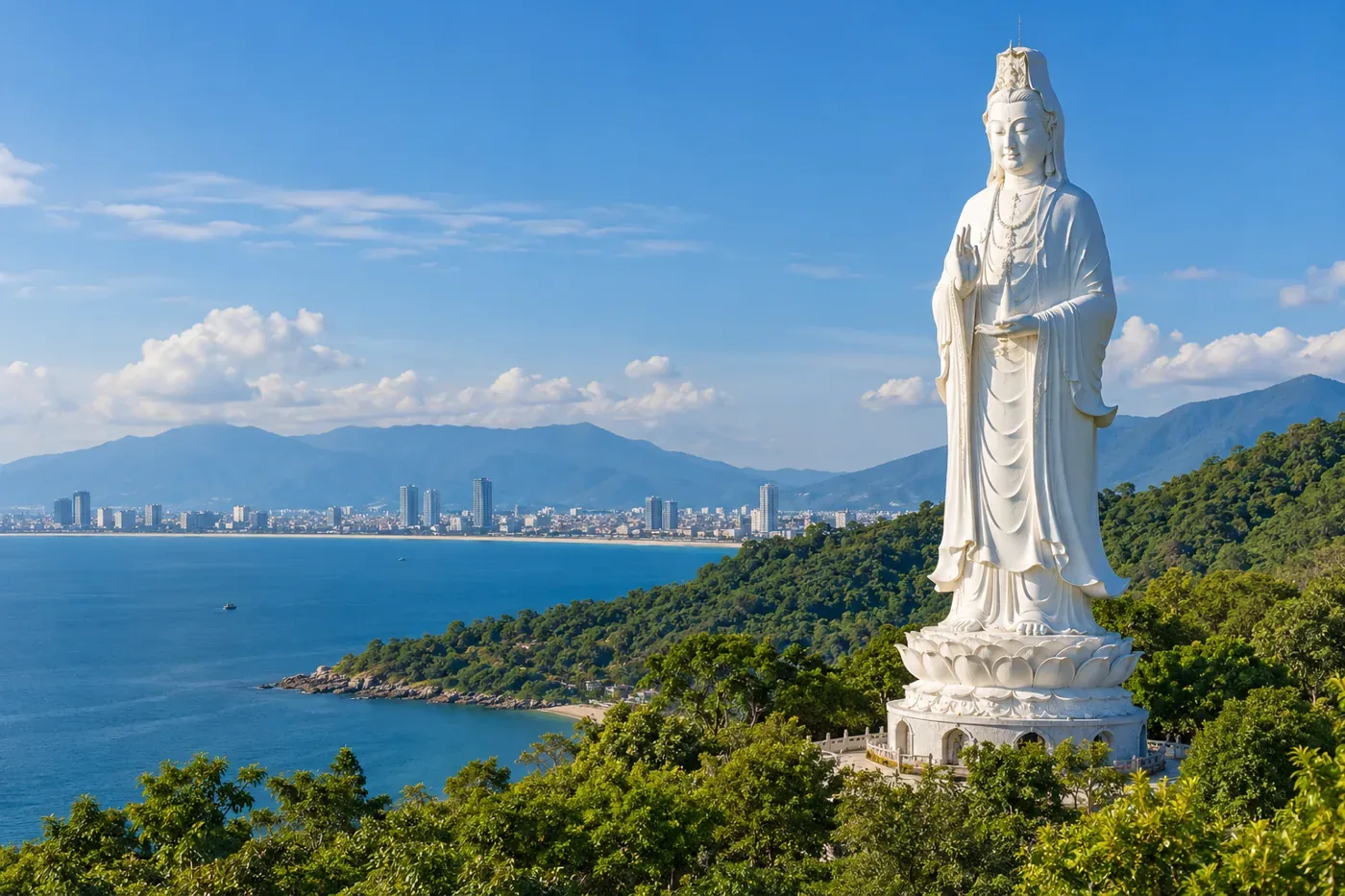
Linh Ung Pagoda at Bai But is the Son Tra temple complex known for its large white Quan Am statue overlooking Da Nang’s coast. Allow around 60–90 minutes for the grounds, worship spaces open to visitors and coastal views. Tell your driver “Linh Ung Bai But, Son Tra” to avoid the other Linh Ung pagodas.
Images in this guide are AI-generated illustrations, not on-site photographs. They do not establish current access, facilities or conditions.
Plan the rest of your stay with our Da Nang travel guide.
Which Linh Ung Pagoda is this?
Da Nang has Linh Ung pagodas at Son Tra, Marble Mountains and Ba Na. This guide covers Bai But on Son Tra. The white standing statue often called the “Lady Buddha” represents Quan Am, or Avalokitesvara, the bodhisattva associated with compassion.
The temple’s own history dates the start of construction to 2004 and its opening to 30 July 2010. It describes the statue as 67 metres high. We do not treat claims about a world record, UNESCO recognition of the statue or guaranteed protection from storms as established facts.
What to see during a short visit

The main courtyard and worship halls
Start with the entrance and courtyard, then follow the signs for the halls currently open. Look at the roof forms and the expressive arhat figures as part of a functioning religious setting. Give worshippers room and pause your visit if a ceremony restricts access.
The Quan Am statue and sea-facing grounds
The statue is the landmark most visitors come to see, but take time to look back over the coast from the permitted grounds. Visibility varies with haze and rain. Do not plan on climbing inside the statue: public access to its interior or upper levels has not been confirmed for this guide.
Getting there from Da Nang

Use the coastal approach towards Son Tra and confirm the temple’s exact pin with your driver. A taxi or private car with a waiting arrangement can make the return simpler than assuming another vehicle will be available immediately. Agree the waiting time, meeting point and total charge before leaving.
A temple visit is different from a circuit of Son Tra’s upper roads. Traffic controls and vehicle restrictions can apply beyond the main temple approach. Read our Son Tra Peninsula guide before adding viewpoints or forest roads, and follow current checkpoints rather than an old route map.
Timing, fees and access
A morning or later-afternoon visit can reduce time in the strongest sun. Allow roughly an hour, or longer for a slower visit with rest breaks. Avoid making the last part of a mountain outing depend on access close to closing time.
A current official visitor-hours notice and parking-price list were not confirmed during this source check. Check the temple’s notices or ask your driver to confirm before setting out. Separate any donation, parking payment or transport charge from a claimed admission fee; ask what you are paying for.
The complex includes slopes, steps and large outdoor areas. Visitors who need a step-free route should ask about the vehicle drop-off, accessible paths and toilets in advance. Do not assume every hall is accessible because the vehicle reaches the grounds.
Dress and behaviour
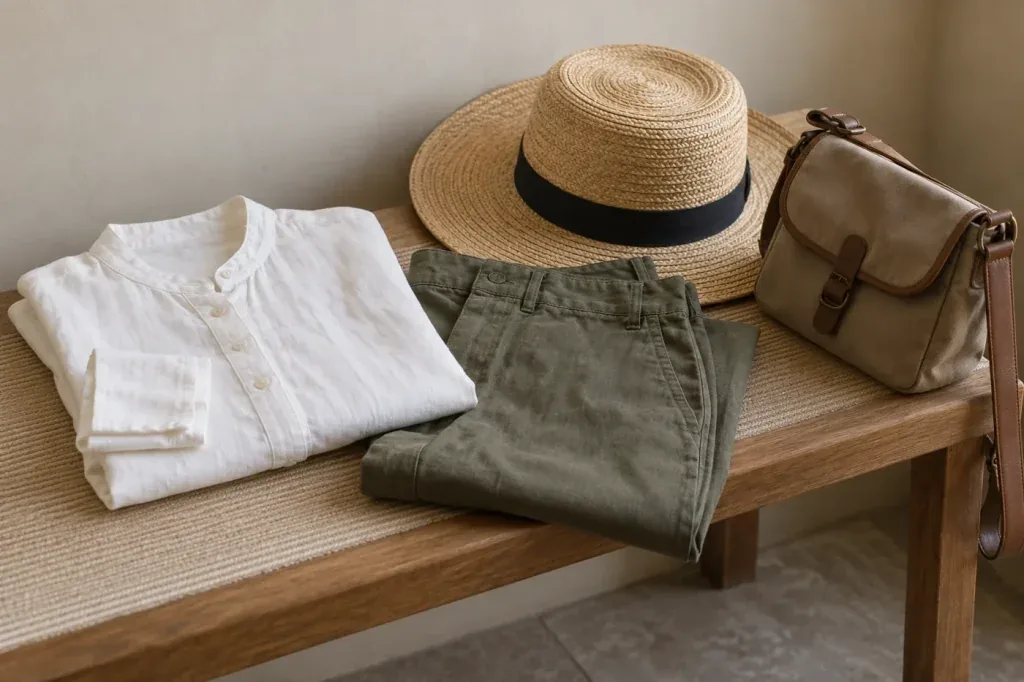
- Wear clothes that cover shoulders and knees. Carry an extra light layer if coming from the beach.
- Remove shoes where requested, keep voices low and avoid blocking doors or altars.
- Ask before taking close photographs of monks or worshippers; obey photography signs inside halls.
- Use designated donation points if you choose to donate. Participation in worship is optional.
- Do not feed monkeys or other animals. Keep food packed away and give wildlife space.
Combining the pagoda with another stop
Pair it with time on the city beach or a coastal meal if you want a gentle half-day. A visit to the other Linh Ung at Marble Mountains is a separate journey with caves and more climbing. The temple at Ba Na Hills belongs to a larger cable-car outing; it is not a nearby alternative.
A simple route through the temple grounds
Treat your first circuit as an orientation walk. Before entering a hall, identify the visitor entrance, any shoe-removal area and the route back to the main courtyard. Then decide which open worship space you want to spend time in. This is more comfortable than repeatedly crossing the complex to follow a list of photographs, especially when travelling with someone who needs regular seated breaks.
For a short visit, choose three priorities: the courtyard, the Quan Am statue from a permitted viewpoint and one open hall where visitors are welcome. For a longer visit, slow down at the interpretation and leave time to observe the architecture without interrupting worship. The aim is not to enter every building. Some doors may serve religious activities or private areas rather than a public sightseeing route.
How to read the setting respectfully
The statue’s familiar tourism nickname can obscure the fact that this is a Buddhist place of worship. When speaking with a guide, ask about Quan Am’s significance and how the different spaces are used today. Questions about the main hall, the figures in the courtyard and the relationship between worship and daily temple life provide more context than a list of dimensions alone.
Separate documented history from religious belief and local storytelling. A guide may describe a legend or a devotional tradition; that can be culturally meaningful without being a measured historical or scientific claim. Avoid repeating such accounts as proof of weather protection, healing or an official international record. If you want a historical detail for your own writing, ask which temple publication or inscription supports it.
Visiting with a mixed-interest group
If some travellers are keen on religious architecture while others mainly want the sea view, agree a meeting place and return time before separating within the public grounds. Keep phones quiet and avoid calling across a prayer space. Someone who does not wish to participate in worship can wait outside a hall without needing to imitate a ritual for a photograph.
For older visitors or anyone tiring in the heat, make the statue and courtyard the core visit and treat additional walking as optional. Ask the driver where a closer permitted pickup is possible before assuming you must return along exactly the same path. This is a request to confirm local arrangements, not a claim that a special accessible entrance is always available.
What to tell your driver
Send the full Bai But/Son Tra location, your preferred departure time and whether you want a waiting return or a one-way drop-off. If adding a beach stop, name it separately. A quote for “Son Tra” may otherwise describe a wider peninsula tour with routes you did not intend to take.
Frequently asked questions
Is Lady Buddha the same place as Linh Ung?
In Da Nang travel listings, “Lady Buddha” usually means the Quan Am statue at Linh Ung Bai But on Son Tra. Confirm the Son Tra location when booking transport.
Is this a hiking trip?
No. You can visit the temple grounds without undertaking a Son Tra hike, although walking and some uneven surfaces remain part of the visit.
Can I wear beach clothes?
Change or cover up before entering the religious grounds. Swimwear alone is inappropriate.