Da Nang transforms after sunset into a vibrant culinary playground where the city’s best street food emerges under neon lights and ocean breezes. For travelers seeking authentic Vietnamese flavors, Da Nang’s nighttime food tours in 2026 offer a structured yet flexible way to taste signature dishes like Mỳ Quảng and Bánh Xèo while navigating the city’s bustling night markets and hidden alley stalls.
The Da Nang Food Tour Festival, running from May 20 to 24 at East Sea Park and Tam Thanh Beach Square, sets the stage for a year of elevated food tourism with over 70 vendors showcasing Quảng cuisine. Whether you book a free walking tour on GuruWalk or explore independently using a food map app, the key is knowing which districts to hit, what dishes to prioritize, and how to stay safe after dark.
Da Nang’s 2026 nighttime food scene centers on the Food Tour Festival from May 20-24 at East Sea Park, featuring 70+ vendors across multiple locations. Signature dishes include Mỹ Quảng, Bánh Bèo, and grilled seafood at Helio night market. Visitors can choose between free walking tours via GuruWalk, private guided tours up to $30, or solo exploration at Sơn Trà night market and Hải Châu hidden alleys.
Update, August 2026: Helio Center suspended Helio Play, Helio Kids and the Helio Night Market for renovation on 5 September 2025, and the Da Nang city tourism portal still lists them as suspended. The Metiz cinema at the same address stayed open. Check directly before you plan a visit.
Why Da Nang After Dark is a Culinary Destination in 2026
The rise of nighttime food tourism in Vietnam’s coastal cities
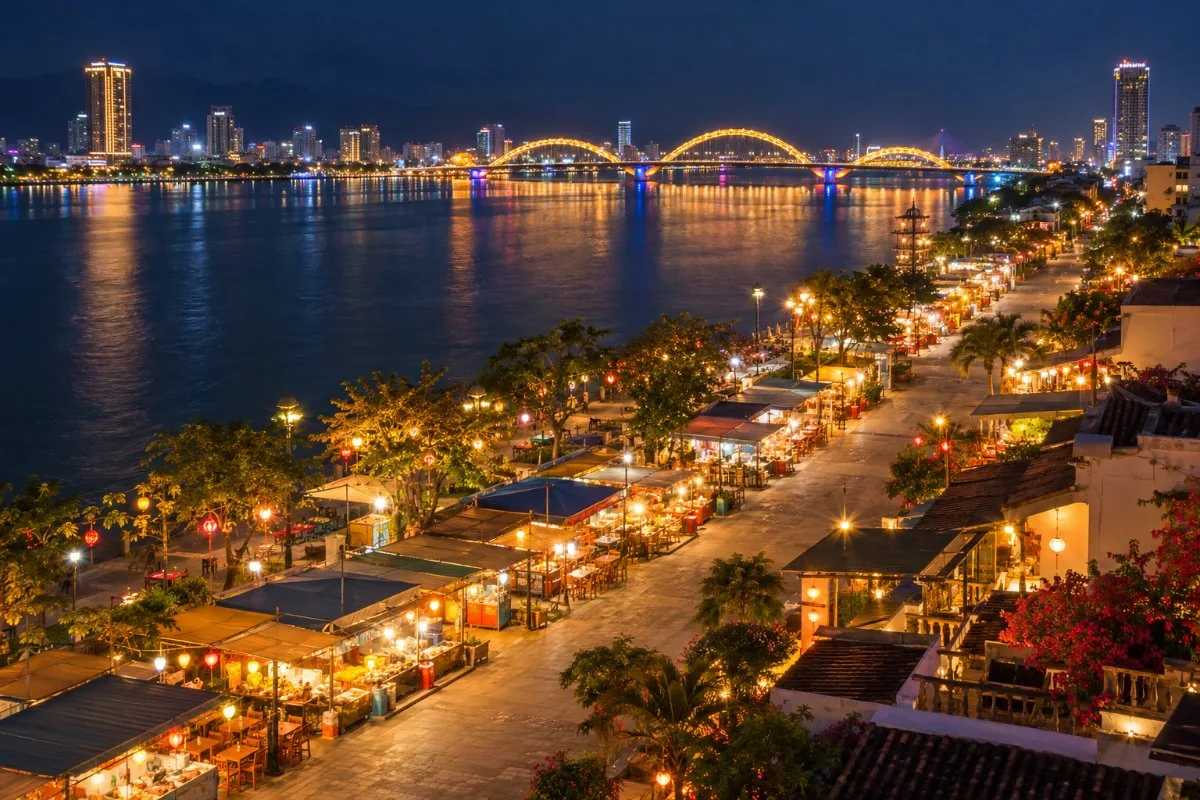
Coastal cities across Vietnam have recognized that evening food tourism generates higher per-visitor spending and longer dwell times compared to daytime activities. Da Nang, with its 30-kilometer coastline and temperate evening climate, has become the testing ground for structured nighttime food experiences. Local authorities have invested in pedestrian-friendly zones around East Sea Park and Tam Thanh Beach Square, creating safe corridors for evening strollers. The city now hosts over 200 licensed street-food vendors operating exclusively after 5 PM, a number that has doubled since 2023 according to the Da Nang Department of Tourism.
This infrastructure supports both spontaneous street-food exploration and organized tour groups, giving visitors flexibility in how they experience the city after dark.
Da Nang Food Tour Festival 2026: a multi-sensory blueprint for the year ahead
The Da Nang Food Tour Festival 2026 runs from May 20 to May 24 at East Sea Park and Tam Thanh Beach Square, serving as the anchor event for the city’s nighttime food season. The festival features over 70 vendors arranged in a curated layout that separates street-food carts from sit-down stalls, allowing visitors to sample everything from quick bites to full plated meals. Live music stages at both locations create a festival atmosphere that extends past midnight.
The event has been designed as a blueprint for the entire year, with many participating vendors committing to year-round night market operations at the same locations. This means travelers visiting outside the festival dates can still access the same food quality and variety at permanent night markets like Helio Center and Sơn Trà market.
What to Expect on a Da Nang Nighttime Food Tour in 2026
A typical nighttime food tour in Da Nang covers 4-6 tasting stops over 2-4 hours, with each stop focusing on a specific regional specialty that represents Quảng cuisine’s rich culinary heritage.
Signature dishes you’ll taste: Mỳ Quảng, Bánh Xèo, and seafood specialties
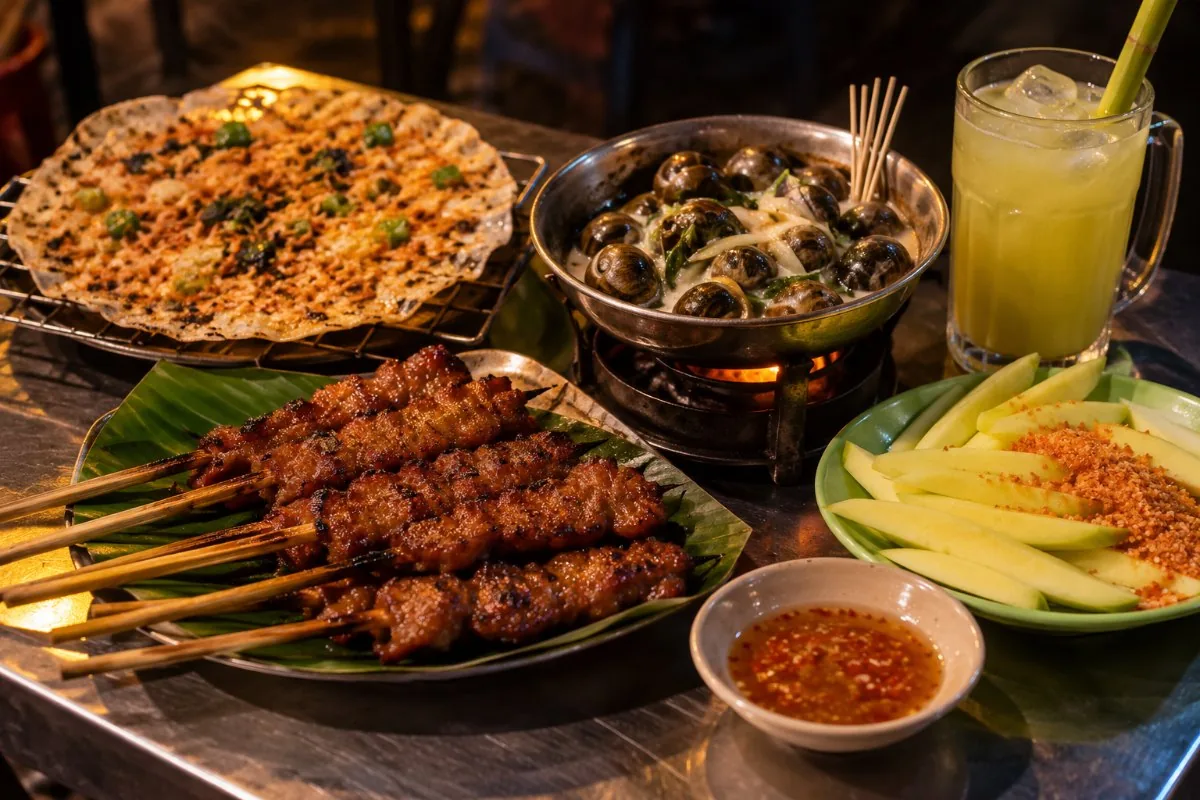
Every Da Nang food tour includes Mỳ Quảng, turmeric noodles served in a rich broth made from bone stock and topped with shrimp, pork, and fresh herbs. The dish is served with a side of sesame rice crackers that you crush into the broth for texture. Bánh Xèo, crispy Vietnamese crepes filled with bean sprouts, shrimp, and pork, are typically cooked fresh at the stall and wrapped in rice paper with lettuce and mint. Bánh Bèo, steamed rice cakes topped with minced shrimp and scallion oil, appear as a lighter option between heavier dishes.
Grilled seafood dominates the Helio night market section of most tours, with stalls offering squid, shrimp, and clams cooked over charcoal and served with a tangy fish sauce dip. Tours often end with a sweet treat like chè, a Vietnamese dessert soup with coconut milk and tapioca pearls.
Street-food carts vs. sit-down stalls: how the 70+ vendor layout works
The Da Nang Food Tour Festival and permanent night markets organize vendors into two distinct zones. Street-food carts line the outer perimeter and offer single-item dishes like Bánh Tráng Nướng (Vietnamese pizza) and grilled corn, with prices ranging from 10,000 to 30,000 VND per item. These carts are designed for quick sampling and walking consumption. Sit-down stalls occupy the center of the market with plastic tables and chairs, serving full meals like Bún Chả Cá (fish cake noodle soup) and Cơm Gà (chicken rice).
Tours typically start with 2-3 cart stops for appetizers, then move to a sit-down stall for the main dish, and finish with a dessert cart. The layout encourages a natural progression from light bites to hearty meals, preventing the food fatigue that can occur when eating through six or seven heavy dishes in a row.
Best Districts and Spots for Night Food Tours in Da Nang
Da Nang’s nighttime food scene concentrates in three distinct districts, each offering a different atmosphere: Sơn Trà for riverfront seafood, Hải Châu for hidden local stalls, and the East Sea Park festival zone for curated variety.
Sơn Trà night market: seafood, live music, and river views
Sơn Trà night market opens daily from 5 PM to 11 PM along the Hàn River, offering a scenic backdrop of illuminated bridges and passing boats. The market specializes in fresh seafood with over 30 stalls grilling shrimp, squid, and fish on charcoal fires. Live music performances at the central stage run from 7 PM to 10 PM, creating a lively atmosphere that attracts both tourists and local families. The market’s location near the Sơn Trà district hotels makes it convenient for travelers staying in the area, and the riverfront promenade provides a pleasant walking path between food stalls.
Vendors here are accustomed to foreign visitors and many have English-language menus, reducing the language barrier for first-time food tour participants.
Hải Châu hidden alleys: local-only stalls away from tourist crowds
Hải Châu district contains Da Nang’s best-kept food secrets in narrow alleys that rarely appear on tourist maps. These alleys, located between Phan Châu Trinh and Lê Duẩn streets, house family-run stalls that have operated for generations, serving dishes like Bánh Canh (thick noodle soup) and Bún Bò Huế (spicy beef noodle soup) that differ from the tourist-oriented versions at night markets. The stalls here have no English signage and menus are written in Vietnamese, making them ideal for guided tours with local guides who can explain the history and preparation methods.
Prices in Hải Châu alleys are 20-30% lower than at tourist markets, with a full bowl of noodle soup costing around 25,000 VND. These alleys are best visited with a guide who knows which stalls have the highest turnover and thus the freshest ingredients.
East Sea Park festival zone: the 2026 Food Tour Festival core area
East Sea Park serves as the primary venue for the Da Nang Food Tour Festival and operates as a permanent food zone throughout the year. The park’s beachfront location provides natural cooling from sea breezes, making it comfortable for evening dining even during the hotter months. The festival zone features a dedicated stage for cooking demonstrations where local chefs show how to prepare Mỳ Quảng and Bánh Xèo, followed by tasting portions for the audience.
Tam Thanh Beach Square, a 10-minute walk from the park, hosts additional vendors specializing in vegetarian and vegan versions of traditional dishes, catering to the growing demand for plant-based options. The entire zone is pedestrian-only from 5 PM to midnight during the festival, with security personnel stationed at entry points to ensure safety.
How to Book and Prepare for a Nighttime Food Tour
Booking a Da Nang nighttime food tour requires choosing between free walking tours, paid group tours, and private guides, with preparation focused on timing, cash, and basic Vietnamese phrases.
Tour duration and pricing: 2-hour walking tours vs. 4-hour guided experiences
Free walking tours through platforms like GuruWalk operate on a tip-based model, typically lasting 2 hours and covering 4-5 tasting stops in the city center. These tours depart at 6 PM and 8 PM daily, with groups averaging 8-12 people. Paid group tours on Klook and GetYourGuide cost between $15 and $25 per person for 3-4 hour experiences that include transportation between districts and a dedicated guide who handles all ordering and payment.
Private tours range from $25 to $30 per person and offer flexibility in start time, dietary accommodations, and the ability to customize the food stops based on personal preferences. The private option is recommended for travelers with specific dietary restrictions or those who want to focus on a particular district like Hải Châu’s hidden alleys.
What to bring: cash, comfortable shoes, and an empty stomach
Vietnamese dong is essential because most street-food stalls and night market vendors do not accept credit cards or international payment apps. Bring small denominations (10,000 and 20,000 VND notes) to make transactions easier, as vendors often struggle to make change for 500,000 VND notes. Comfortable walking shoes are non-negotiable because food tours cover 3-5 kilometers on foot across uneven pavement, market floors, and alleyways. An empty stomach sounds obvious but matters more than you think — the average tour serves 6-8 tasting portions, and starting with a full meal means you will miss the best dishes.
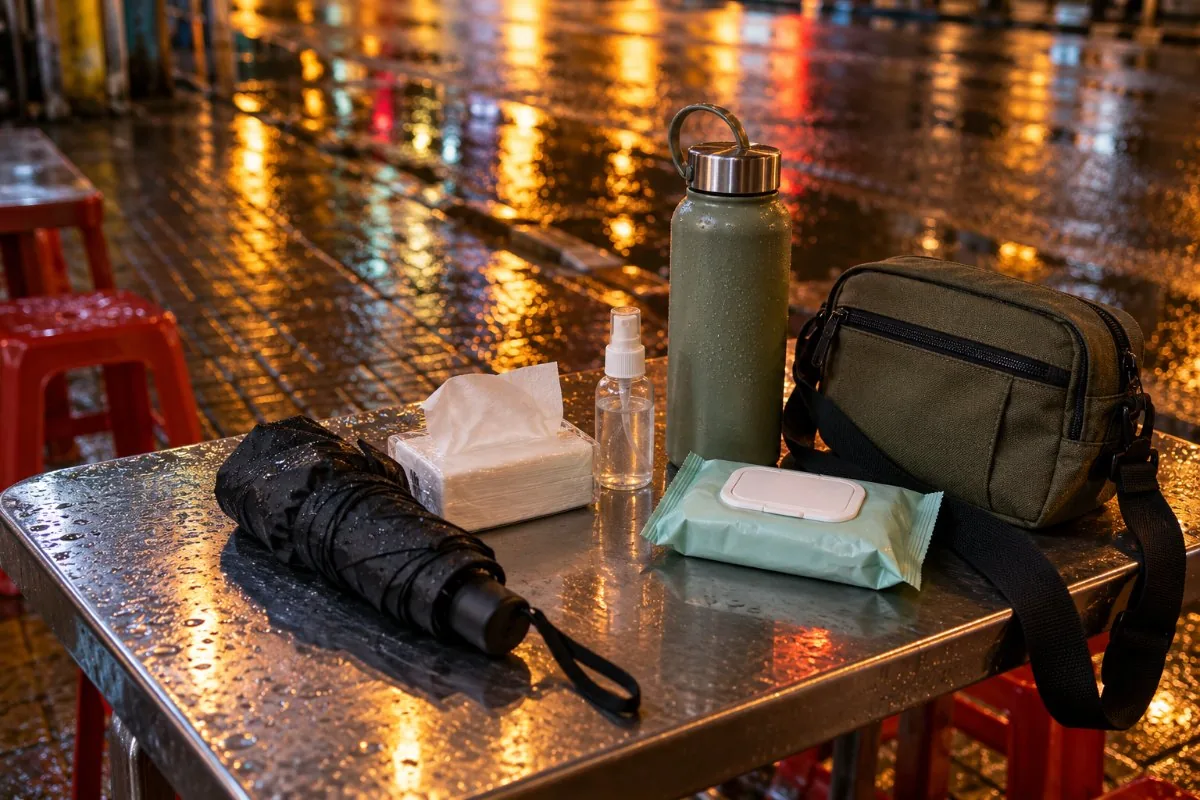
A reusable water bottle helps between stops, and hand sanitizer is useful for eating with your hands at Bánh Xèo and grilled seafood stalls.
Language tips: common Vietnamese phrases for ordering street food
Learning three Vietnamese phrases dramatically improves your street-food experience. “Bao nhiêu?” (how much?) is the most important phrase because it lets you confirm prices before ordering, preventing confusion at stalls without displayed menus. “Một phần” (one portion) tells the vendor exactly how much you want, which is useful when you want to sample without committing to a full bowl. “Cảm ơn” (thank you) builds goodwill with vendors who appreciate the effort. For guided tours, your guide handles all ordering, but knowing these phrases helps when you break away to explore on your own.
Vendors at Sơn Trà night market and East Sea Park are accustomed to tourists and will often point to prices on a calculator if the language barrier proves challenging.
Night Market vs. Guided Tour: Which Experience Fits You?
Your choice between solo night market exploration and a guided food tour depends on your comfort level with Vietnamese food culture, your budget, and how much context you want behind each dish.
| Feature | Solo Night Market Exploration | Guided Walking Tour | Hybrid (Self-Guided + App) |
|---|---|---|---|
| Cost | Free entry, pay per dish (10,000-50,000 VND) | $15-$30 per person | Free entry + optional app fee |
| Duration | 1-3 hours, flexible | 2-4 hours, fixed schedule | 2-4 hours, flexible |
| Dish variety | Limited to what you can identify | 4-6 curated stops with variety | Moderate, depends on research |
| Cultural context | Minimal, no explanations | Full stories behind each dish | Moderate, from app descriptions |
| Hidden gems | Unlikely to find without local knowledge | Guaranteed access to local-only stalls | Possible with good app curation |
| Language barrier | High, menus in Vietnamese | None, guide handles everything | Medium, app translations help |
| Best for | Adventurous eaters on a budget | First-time visitors wanting context | Independent travelers with research time |
Solo exploration at Helio or Sơn Trà night market: pros and cons
Exploring Helio night market or Sơn Trà market on your own gives you complete control over what you eat and how long you stay. You can spend 30 minutes at a grilled seafood stall without feeling rushed, or skip tourist-heavy dishes in favor of items that catch your eye. The downside is that you miss the stories behind each dish — the history of Mỳ Quảng as a Cham-influenced noodle soup, or why Bánh Bèo is served in small ceramic dishes.
Without a guide, you also risk ordering from stalls with lower turnover, where ingredients may have been sitting out for hours. The language barrier at non-tourist stalls can lead to ordering more food than intended or accidentally paying inflated prices.
Guided walking tours: local guides, hidden gems, and cultural stories
Guided walking tours like GuruWalk’s “Taste of 10 Original Flavors” take you through Hải Châu’s hidden alleys where you would never venture alone. The guide explains the regional variations of each dish — how Mỳ Quảng from Quảng Nam province differs from the Da Nang version, or why Bánh Xèo in central Vietnam uses turmeric while the southern version uses coconut milk. Guides also handle all ordering and payment, which eliminates the stress of navigating Vietnamese currency and menus. The group dynamic adds a social element, with other travelers sharing their impressions and recommendations for other Da Nang activities.
The main limitation is the fixed schedule — you cannot linger at a stall you love because the group needs to move to the next stop.
Hybrid approach: self-guided with a food map app
A hybrid approach combines the independence of solo exploration with curated recommendations from food map apps like the Da Nang Fantasticity app or Google Maps custom lists. Download a list of 10-15 recommended stalls before your trip, then navigate between them at your own pace using the app’s built-in map. This approach works well for repeat visitors who already understand Vietnamese food culture and want to revisit specific dishes they loved on previous trips.
The trade-off is that you miss the spontaneous discoveries that come from wandering without a plan, and you still face the language barrier at stalls that do not appear on English-language apps. The hybrid method is best for travelers who have done a guided tour on their first visit and want a more independent experience on subsequent trips.
Safety and Practical Tips for Eating in Da Nang After Dark
Staying safe during Da Nang nighttime food tours requires attention to food hygiene, reliable transportation, and awareness of seasonal weather patterns that affect market operations.
- Food hygiene: Choose stalls with high customer turnover because high volume means fresher ingredients and faster cooking. Look for stalls where the vendor is actively cooking rather than waiting for customers, and avoid stalls with pre-cooked food sitting uncovered. The 70+ vendors at the Food Tour Festival are licensed and inspected, making the festival zone the safest option for hygiene-conscious eaters.
- Transportation: GrabBike costs approximately 15,000 VND per kilometer and is the fastest way to move between districts after dark, but only take rides from verified drivers through the app. Standard taxis from Mai Linh or Vinasun cost about 10,000 VND per kilometer and are safer for groups of three or more. Avoid unmarked taxis that park outside night markets, as they often charge inflated rates for tourists.
- Weather considerations: The monsoon season from October to December brings heavy evening rain that can shut down outdoor night markets and street-food carts. During these months, focus on covered markets like Helio Center or indoor food courts at shopping malls. Evening sea breezes from May to September make outdoor dining comfortable, but bring a light jacket because temperatures can drop to 22°C after midnight.
- Personal belongings: Keep your phone and wallet in front pockets or a cross-body bag, especially in crowded market areas where pickpocketing can occur. Most night markets have security cameras and uniformed guards, but crowded stalls provide cover for opportunistic theft.
- Dietary restrictions: Communicate allergies by showing a translated card on your phone, because English is not widely understood at street-food stalls. Vegetarian options exist at Tam Thanh Beach Square vendors during the festival, but most street food contains fish sauce, shrimp paste, or pork-based broth.
Frequently Asked Questions
What is the best time to start a Da Nang nighttime food tour?
The ideal start time is between 6 PM and 7 PM, when night markets are fully open and the evening heat has subsided. Starting early gives you time to visit 4-6 stalls before the crowds peak at 8 PM, and you can finish before the last vendors close at 11 PM.
Are Da Nang food tours suitable for vegetarians?
Yes, but you need to book a tour that specifically offers vegetarian options. The Da Nang Food Tour Festival includes vegetarian vendors at Tam Thanh Beach Square, and some private tour operators can customize the menu to exclude meat and fish sauce. Standard group tours focus on traditional dishes that typically contain meat or seafood.
How much does a Da Nang food tour cost in 2026?
Free walking tours via GuruWalk operate on a tip basis, while paid group tours range from $15 to $25 per person on platforms like Klook and GetYourGuide. Private tours cost between $25 and $30 per person and offer the most flexibility in timing and menu choices.
Can I book a food tour in English?
Yes, all major tour operators on GetYourGuide, Klook, and GuruWalk offer English-speaking guides. The Da Nang Food Tour Festival also provides English-language maps and signage at information booths located at East Sea Park and Tam Thanh Beach Square.
What should I avoid eating on a nighttime food tour?
Avoid pre-cooked food that has been sitting uncovered, especially items like spring rolls and fried snacks that may have been prepared hours earlier. Stick to stalls where food is cooked to order, and avoid raw seafood unless you are at a high-turnover stall with established hygiene practices.
Is Da Nang safe for solo female travelers on food tours?
Da Nang is generally safe for solo female travelers, with well-lit night markets and regular police patrols in tourist areas. Stick to guided tours for evening activities, use GrabBike or taxis for transportation, and avoid walking alone through dark alleys in Hải Châu district without a guide.
What happens if it rains during the Da Nang Food Tour Festival?
The festival has covered areas at East Sea Park and Tam Thanh Beach Square that provide shelter during light rain. In case of heavy rain, many vendors operate from permanent stalls with roofs, and the festival continues as scheduled. Check the official Da Nang Fantasticity Facebook page for real-time weather updates during the festival days.
Next Steps
Da Nang’s nighttime food tours in 2026 offer a structured gateway into Vietnam’s most vibrant coastal cuisine, whether you choose the curated festival experience, a guided walking tour through hidden alleys, or solo exploration at the night markets. The key is matching the experience to your comfort level — first-timers benefit from guided tours that handle language and logistics, while experienced travelers can dive into independent exploration with a food map app.
Book your tour through GuruWalk for free options, Klook for structured group tours, or simply show up at East Sea Park between May 20 and 24 for the festival. Pack cash, comfortable shoes, and an appetite for dishes that define Da Nang’s culinary identity.
Part of our guide to places to visit in Da Nang.