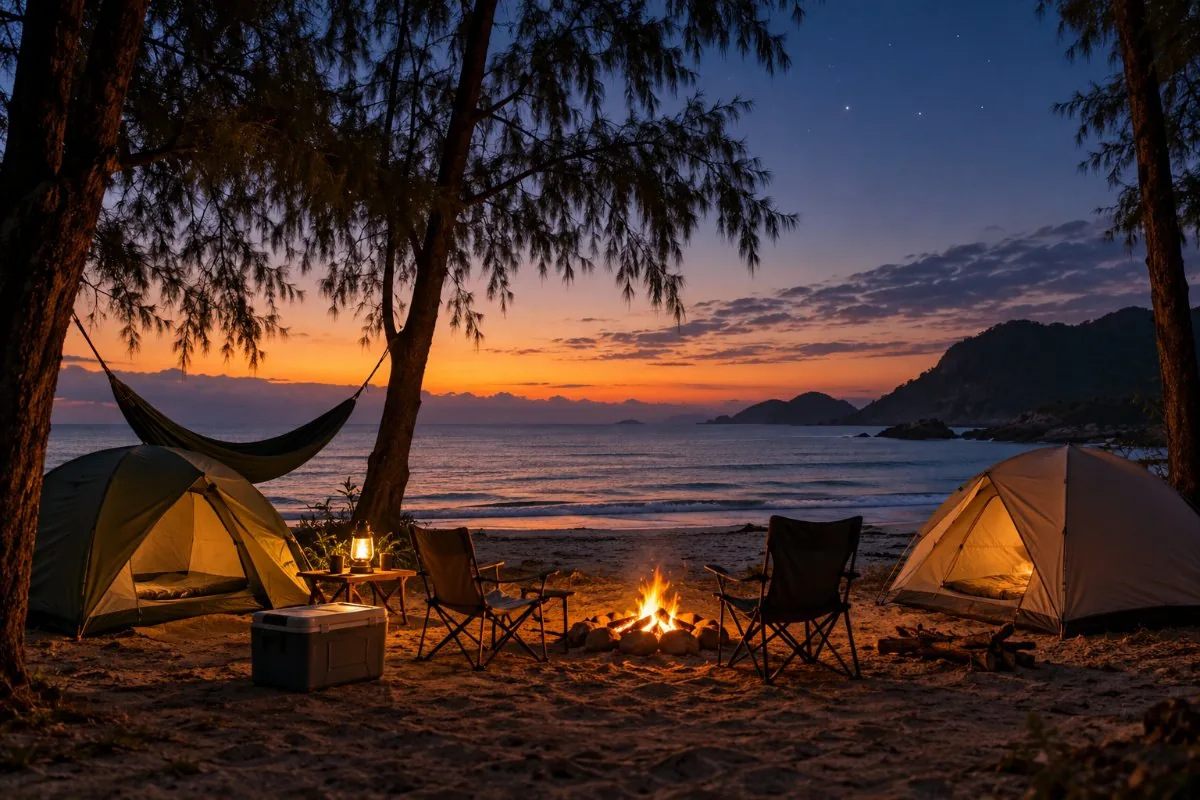
Da Nang’s coastline offers a unique accommodation alternative in 2026. Travelers are increasingly choosing to pitch tents directly on the sand, falling asleep to the sound of waves and waking to the sunrise over the East Sea. This guide explores the best beachfront camping zones in Da Nang, distinguishes between DIY camping and glamping, and provides a practical gear checklist for a safe and memorable overnight stay.
Da Nang beachfront camping in 2026 presents three distinct experiences: fully-equipped glamping along the Cu De River, DIY tent setups on quieter stretches like Bac My An, or hybrid resort packages that blend comfort with outdoor immersion. The dry season, from February to August, offers the most favorable weather for sleeping under the stars. Essential preparations include understanding tide patterns, using insect repellent, and sourcing fresh seafood from local markets like My An for an authentic coastal cookout.
Why Da Nang is a Prime Beach Camping Destination
The shift from traditional resort stays to outdoor experiences is redefining how visitors connect with Central Vietnam’s coastline. Travelers now seek to feel the sand beneath their feet at night, rather than staying exclusively in air-conditioned rooms. Unlike Nha Trang, where extensive beachfront development has limited spontaneous camping opportunities, Da Nang retains accessible coastal stretches suitable for tent setups without being overshadowed by high-rise hotels. While Phan Rang boasts beautiful, undeveloped beaches, it often lacks the convenient infrastructure and dining options that enhance a camping trip. Da Nang offers a compelling balance: the raw appeal of sleeping outdoors combined with proximity to restaurants and convenience stores via a short motorbike ride.
Da Nang’s Unique Coastal Geography for Overnight Stays
Da Nang’s varied geography creates distinct micro-environments ideal for different camping preferences. My Khe Beach features a long, flat shoreline with soft sand, facilitating easy tent staking. The Son Tra Peninsula offers coves where jungle meets the beach, allowing camping under tree canopies with the ocean just meters away. The stretch from Bac My An to Non Nuoc Beach provides wider, less crowded sections perfect for groups seeking privacy. Each zone possesses unique wind patterns, tide schedules, and sunrise angles, ensuring a varied camping experience depending on your chosen location.
2026 Travel Trends: Glamping, Eco-Camping, and Digital Detox by the Sea
Three prominent trends are shaping beach camping in Da Nang this year. Glamping services, such as those offered by VOC Glamping along the Cu De River, provide pre-pitched tents equipped with mattresses, lighting, and meal packages, lowering the barrier for novice campers who lack equipment. Eco-camping appeals to environmentally conscious travelers aiming to minimize their footprint through the use of solar-powered lanterns, reusable containers, and biodegradable toiletries. Digital detox camping, characterized by a deliberate disconnection from devices in favor of campfire evenings, has gained popularity among remote workers seeking a break from screen-intensive workdays.
These trends are not mutually exclusive; many visitors integrate elements from all three into a single trip.
Types of Beachfront Camping in Da Nang
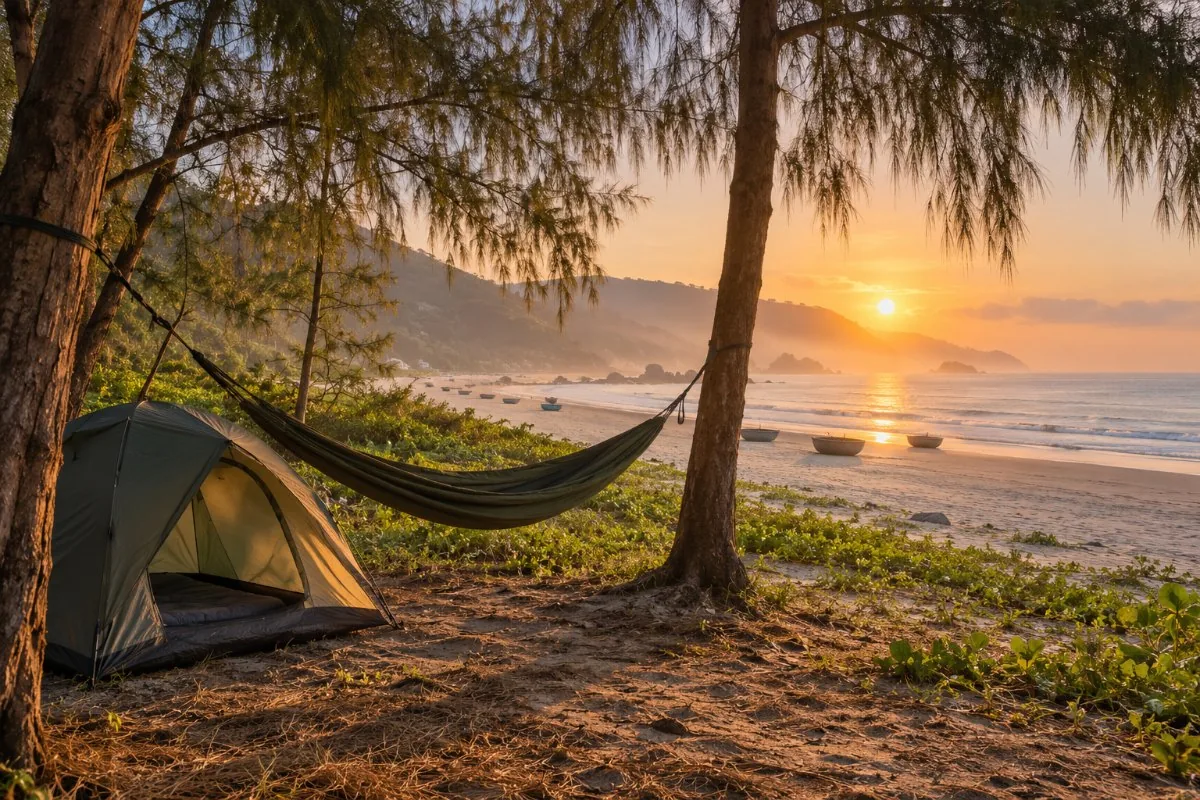
Da Nang provides three distinct camping models, each catering to different experience levels and budgets. DIY camping offers complete control over location and expenses but necessitates bringing or renting all necessary gear. Glamping services manage the setup and breakdown, allowing visitors to arrive with minimal luggage. Hybrid options, available through some beachfront resorts, permit camping on resort grounds while retaining access to amenities like bathrooms, restaurants, and emergency services.
DIY Beach Camping: Permits, Gear, and Best Practices
Setting up your own tent on Da Nang’s beaches typically does not require a formal permit in most areas, provided you adhere to local regulations. Camping is generally permitted on public beaches, as long as you remain above the high-tide line and do not obstruct pedestrian pathways. It is advisable to avoid setting up directly in front of lifeguard stations or private resort properties. For gear, a four-season tent with ample ventilation is highly recommended, as tropical humidity can cause significant condensation inside standard three-season tents. A groundsheet is crucial for protection against sand fleas and moisture seeping up from the ground.
Practicing tent setup once before your trip is beneficial; attempting it for the first time in the dark or wind can be challenging.
Glamping Services: VOC Glamping and Riverside Setups
VOC Glamping, situated along the Cu De River approximately 30 minutes from central Da Nang, represents the area’s most established glamping option. Their setup features spacious canvas bell tents furnished with beds, battery-powered string lights, and a dedicated cooking area. Social media posts often showcase groups enjoying campfires with the river reflecting the moonlight, highlighting the aesthetically pleasing environment. While this experience incurs a higher cost than DIY camping, it typically includes dinner, breakfast, and all necessary equipment.
The riverside location offers a quieter, more sheltered environment compared to the beach, with reduced wind and fewer insects, though it trades direct ocean access.
Hybrid Options: Beachfront Resorts with Camping Add-ons
Several upscale resorts in Da Nang now offer camping packages for guests desiring an outdoor experience without compromising comfort. For instance, the InterContinental Danang Sun Peninsula Resort provides a VIP Kids Explorer Experience, which includes supervised camping on the resort’s private beach. Parents can opt to stay in their villas while children camp under staff supervision. Other resorts along the My Khe strip have introduced “glamping add-ons,” where they set up a tent on the beach in front of your room, complete with room service delivery.
These hybrid options come at a significantly higher price point than independent camping but offer a valuable safety net for families or those new to camping.
| Feature | DIY Beach Camping | Glamping (e.g., VOC Glamping) | Hybrid Resort Camping |
|---|---|---|---|
| Cost per night | $0–$10 (gear rental extra) | $50–$80 per person | $150–$300 per person |
| Gear required | Full setup (tent, sleeping bag, etc.) | None (provided) | None (provided) |
| Bathroom access | Public beach toilets nearby | Shared glamping facilities | Resort bathroom in room |
| Food included | Self-catered | Dinner + breakfast | Full resort dining |
| Best for | Experienced campers, budget travelers | Couples, first-time campers | Families, luxury seekers |
Top Beachfront Camping Zones in Da Nang
Selecting the appropriate zone is fundamental to the overall camping experience. My Khe Beach offers convenience and amenities but can be noisy. The Son Tra Peninsula provides seclusion but demands more thorough preparation. The Bac My An to Non Nuoc stretch offers a middle ground—quieter than My Khe yet still within walking distance of essential services.
My Khe Beach Area: Accessibility, Facilities, and Crowd Levels
My Khe Beach stands out as the most accessible camping zone in Da Nang. Spanning approximately 900 meters from the Marble Mountains area to the base of the Son Tra Peninsula, it features frequent public access points and ample width, allowing campers to find space even during peak seasons. The primary drawback is potential noise from motorbikes on the beachfront road and early-morning joggers.
Facilities include public toilets at various points along the beach, small convenience stores selling essentials, and seafood restaurants within a five-minute walk. For those prioritizing proximity to amenities and activity, My Khe is a practical choice.
Son Tra Peninsula: Secluded Coves and Jungle-Meets-Beach Spots
Son Tra Peninsula, often referred to as Monkey Mountain, provides a distinctly different camping experience. The peninsula’s eastern side hosts several small coves, accessible primarily by motorbike or on foot. These locations combine dense jungle vegetation with narrow sandy beaches, offering a sheltered environment that minimizes wind exposure and provides natural shade. The seclusion ensures privacy, but it also means a lack of facilities, nearby restaurants, and often limited phone signal. Campers must carry all necessary water, food, and gear down potentially steep paths to reach the beach.
The reward for this effort is waking to the sight of returning fishing boats and the sound of waves against rocks—a truly immersive outdoor experience.
Bac My An to Non Nuoc Beach: Quieter Alternatives
The coastal stretch from Bac My An Beach down to Non Nuoc Beach offers a compromise between the convenience of My Khe and the isolation of Son Tra. Situated directly behind the My An neighborhood, this area features a wider, less developed beach with fewer high-rise hotels obstructing the view. Campers can set up within walking distance of the My An local market, ideal for purchasing fresh ingredients for meals.
Non Nuoc Beach, at the southern end of this stretch, is conveniently located about a 30-minute drive from Hoi An Ancient Town, enabling campers to visit Hoi An the following morning.
Best Time of Year for Beach Camping in Da Nang
Timing your camping trip correctly is crucial for a positive experience. The dry season, from February to August, offers the most predictable conditions, while the monsoon season, from September to January, requires careful planning and adaptability.
Dry Season (February to August): Optimal Weather
February through August presents the most favorable weather for beach camping in Da Nang. Daytime temperatures typically range from 25°C to 35°C, with low humidity and minimal rainfall. Wind patterns during these months are generally predictable, featuring light evening breezes that help deter mosquitoes without complicating tent setup. The sunrise occurs around 5:30 AM during the summer months, providing ample daylight for packing up and exploring.
This period aligns with peak tourist season, meaning popular spots like My Khe Beach will be more crowded. However, the beach’s width generally allows for finding suitable camping locations. Booking glamping services, such as VOC Glamping, is advisable at least two weeks in advance during this time.
Monsoon Season Realities (September to January)
Camping during the monsoon season is feasible but necessitates preparation for abrupt weather shifts. September through January is characterized by heavy rainfall, strong winds, and the potential for typhoons. Wind direction can change, blowing directly onshore during storms, requiring tents to be positioned with their backs facing the wind. Prolonged rainfall means a waterproof tent with sealed seams and an extended rainfly is essential. The advantage of camping during this period is solitude, as fewer tourists frequent the beaches, potentially leaving entire stretches of coastline unoccupied.
Always consult the weather forecast before your trip and have a contingency plan for relocating to indoor accommodation if a typhoon warning is issued.
Lunar New Year Camping Tradition
Vietnam Coracle, a respected resource for independent travel in Vietnam, has documented a decade-long tradition of Lunar New Year (Tet) camping along riverbanks and beaches in Central Vietnam. Their February 2026 posts describe setting up camp on the banks of the Cu De River during Tet, a period when the country observes a slowdown and families gather. Camping during Tet offers a unique cultural immersion, with opportunities to hear distant fireworks, observe locals visiting coastal temples, and enjoy the cooler February weather.
The resource notes that riverbank camping during Tet requires advance planning due to widespread business closures for the holiday, emphasizing the need to stock up on food and water beforehand.
Essential Gear and Preparation Checklist
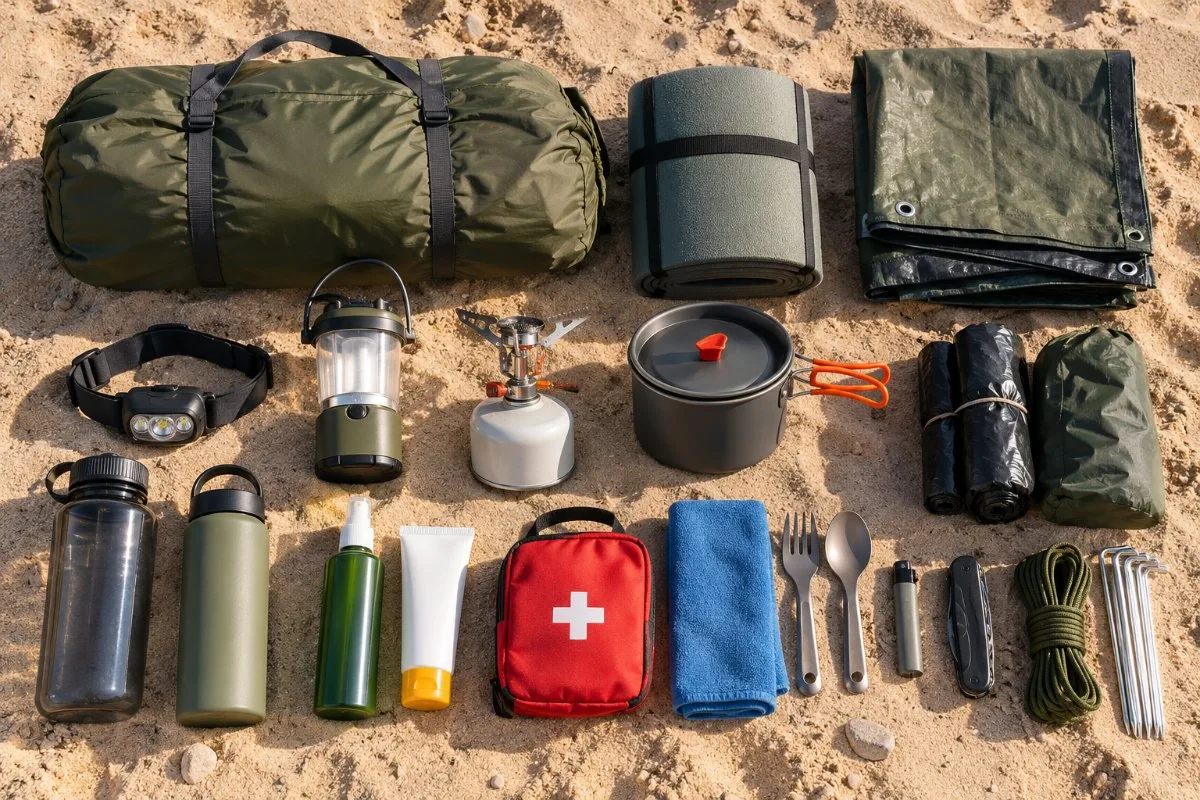
Packing the appropriate gear for Da Nang’s tropical beach environment helps prevent common issues that can detract from camping trips. The following checklist covers shelter, food, and safety items specific to this setting.
Tent and Shelter for Tropical Beach Conditions
A standard three-season tent can suffice for Da Nang beach camping, but a four-season tent with enhanced ventilation will manage humidity more effectively. Opt for tents with mesh panels on the sides and top to allow airflow while excluding insects. The sandy ground at My Khe and Bac My An requires specialized equipment; standard tent stakes are insufficient. Sand stakes, which are wider and longer, are designed for anchoring in loose sand. Alternatively, filling stuff sacks with sand and attaching them to your tent’s guy lines can provide stability.
A footprint or groundsheet is mandatory, as sand retains moisture, and tent floors can become damp from condensation even without rain. Ensure your tent is set up at least 30 meters above the high-tide line; consult tide tables for Da Nang before selecting your site.
Food, Water, and Cooking: Local Markets and Sourcing
The My An market, located behind Bac My An Beach, is an excellent source for fresh ingredients for a beach cookout. Purchasing shrimp, squid, and fish caught by local fishermen overnight in the morning offers significantly lower prices than restaurant markups. A portable camping stove with butane canisters is recommended, as open fires are often restricted on Da Nang beaches during the dry season due to fire hazards. Bring a pot for boiling water, a pan for cooking seafood, and reusable plates and utensils.
For drinking water, it is advisable to purchase large bottles from convenience stores rather than relying solely on filtration. Ice is readily available at most small shops near the beach for keeping perishables cool.
Safety Gear: Tide Awareness, Insect Protection, and First Aid
Three safety items are essential for beach camping in Da Nang. Firstly, download a tide schedule application; the tidal range in Da Nang can exceed one meter, and tents positioned too close to the water have been washed away. Secondly, carry insect repellent containing DEET or picaridin, as mosquitoes are most active at dawn and dusk, and the Son Tra Peninsula area has a higher insect density due to its jungle environment. Thirdly, pack a basic first aid kit including antiseptic wipes, bandages, pain relievers, and antihistamine cream for insect bites.
While jellyfish stings are uncommon along Da Nang’s main beaches, they are possible. Having vinegar readily available can help neutralize stings if you plan to swim near your campsite.
Combining Beach Camping with Da Nang’s Attractions
A beach camping trip in Da Nang is most rewarding when paired with daytime exploration of nearby attractions. The city’s geography places most major sights within a 30-minute drive of the primary camping zones, facilitating straightforward multi-day itineraries.
Day Trips from Your Campsite
Three key attractions are easily accessible from Da Nang’s beach camping zones. The Marble Mountains, a cluster of five marble and limestone hills featuring caves and Buddhist temples, are a 10-minute drive from Non Nuoc Beach. Ba Na Hills, home to the Golden Bridge, is a 45-minute drive from My Khe Beach; arriving early is recommended to avoid crowds. Hoi An Ancient Town is a 30-minute drive south of Non Nuoc Beach, allowing for camping overnight and visiting Hoi An the following day.
These attractions are consistently ranked among the top things to do in Da Nang, and their proximity to camping zones means you do not have to choose between outdoor adventure and cultural sightseeing.
Multi-Day Camping Itinerary: 3 Days of Coast and Culture
A three-day itinerary effectively balances camping with exploration. Day one: establish camp at Bac My An Beach in the morning, procure supplies from the My An market, prepare dinner on the beach, and spend the night under the stars. Day two: pack up camp, drive to the Marble Mountains for a morning hike, then proceed to Hoi An for the afternoon. Camp the second night at Non Nuoc Beach, which is closer to Hoi An.
Day three: explore the Son Tra Peninsula in the morning, visiting the Linh Ung Pagoda and the giant Lady Buddha statue, before returning to central Da Nang for lunch prior to departure. This itinerary minimizes driving distances and maximizes time spent outdoors.
Transport Logistics: Motorbike vs. Rental Car
Your choice of transport significantly impacts how much gear you can carry and which camping locations are accessible. A motorbike is the most common mode of transport in Da Nang and is suitable for camping if you pack light. Use bungee cords to secure your tent and sleeping bag to the rear seat, and wear a backpack for cooking gear and food. Online communities frequently share tips on motorbike camping, emphasizing the importance of waterproof bags for electronics. A rental car provides more space for larger tents, coolers, and additional supplies.
It also facilitates access to more remote spots on the Son Tra Peninsula, even on steep paved roads. Rental cars in Da Nang typically cost between $30–$50 per day in 2026, including insurance.
Important Notes and Common Mistakes to Avoid
Even experienced campers can encounter challenges when adapting to Vietnam’s tropical beach environment. The most frequent errors involve assumptions about regulations, environmental oversights, and inadequate weather planning.
Legal Considerations: Where Camping is Allowed
Camping is permitted on most public beaches in Da Nang, but specific restrictions apply. Avoid setting up camp directly in front of resort properties, as these are private lands where security personnel may ask you to relocate. The area immediately in front of the My Khe lifeguard station is off-limits overnight to ensure clear access for emergency vehicles. The northern tip of the Son Tra Peninsula contains a military zone where camping is strictly prohibited; focus on the central and southern sections instead.
While there are no official fines for illegal camping in Da Nang, being asked to move late at night can be disruptive. When in doubt, consult with local shop owners or hotel reception staff.
Environmental Responsibility: Leave-No-Trace Principles
Vietnamese beaches face increasing waste management challenges, and campers play a vital role in addressing this issue. Pack out everything you bring in, including food scraps, which can attract rodents and stray animals. My Khe Beach has public trash bins, but they often overflow during peak season; seek out bins at hotels or restaurants rather than leaving trash beside full public receptacles. Burning trash in campfires is prohibited. Minimize the use of single-use plastics by bringing reusable food containers.
Adhering to the “leave-no-trace” principle is particularly important in Vietnam due to less developed waste processing infrastructure compared to Western countries. Leaving a clean campsite sets a positive example for other visitors and local residents.
Weather Contingency Planning: Storm Preparedness
Sudden storms can quickly transform a pleasant camping night into a hazardous situation. If you observe dark clouds forming or hear distant thunder, begin packing immediately. Delaying until the rain starts can make tent packing difficult. Identify the nearest indoor shelter before setting up camp. On My Khe Beach, this could be a beachfront restaurant or hotel lobby. On Son Tra Peninsula, a temple or local residence might serve as shelter. Keep a headlamp and your phone fully charged for navigation in low light.
If lightning is detected nearby, abandon your tent and seek refuge in a solid structure, as tents offer no protection against lightning strikes on an open beach.
Frequently Asked Questions
Is it legal to camp overnight on Da Nang beaches in 2026?
Camping overnight on public beaches in Da Nang is generally permitted, provided you remain above the high-tide line, avoid private resort property, and do not obstruct pedestrian pathways or emergency access points. Formal permits are not typically required for independent camping on most sections of My Khe, Bac My An, and Non Nuoc beaches.
What is the average cost of glamping versus DIY camping in Da Nang?
DIY camping incurs minimal site costs, with expenses primarily related to gear rental (approximately $5–$10 per night for basic equipment) and food. Glamping services, such as those at VOC Glamping, typically range from $50–$80 per person per night, inclusive of meals and equipment. Hybrid resort camping packages can cost between $150–$300 per person per night.
Are there shower and toilet facilities near beach camping spots?
My Khe Beach offers public toilet facilities at several points along its length. Bac My An and Non Nuoc beaches have fewer facilities, potentially requiring the use of restrooms at nearby restaurants or convenience stores. The Son Tra Peninsula has no public facilities, necessitating self-sufficiency for washing and waste disposal.
How far is Da Nang beach camping from Hoi An?
Non Nuoc Beach, the southernmost camping zone, is approximately a 30-minute drive by motorbike or car from Hoi An Ancient Town. My Khe Beach is about a 45-minute drive from Hoi An. This proximity allows for easy integration of a beach camping trip with a visit to Hoi An’s lantern-lit streets and markets.
Can I rent camping gear in Da Nang or should I bring my own?
Several outdoor gear rental shops operate near My Khe Beach and in central Da Nang, offering tents, sleeping bags, camping stoves, and basic cooking equipment for $5–$15 per item per night. Gear quality can vary, so it is advisable to inspect items for damage before renting. Bringing your own equipment is recommended for longer trips (more than two nights) or if you require specialized items.
Is beach camping safe for solo travelers and families with children?
Beach camping in Da Nang can be safe for solo travelers and families when appropriate locations are chosen. My Khe Beach offers the highest level of safety due to its proximity to other people, amenities, and emergency services. The Son Tra Peninsula is more suitable for experienced campers or groups. Families with young children may prefer glamping or hybrid resort options that provide staff assistance. It is advisable to secure valuables in your tent or with a nearby hotel and never leave children unattended near the water.
Part of our guide to where to stay in Da Nang.