Da Nang’s food scene has transformed, and one of the most notable developments is the rise of vegetarian Korean BBQ. This is no longer a niche concept but a growing movement fueled by the city’s increasing Korean tourist population and a local appetite for plant-based dining. Restaurants in areas like My Khe and An Thuong now serve marinated tofu and mushroom bulgogi, with an entirely meat-free banchan spread.
Vegetarian Korean BBQ in Da Nang blends authentic grilling techniques with plant-based innovation, creating a dining experience that satisfies vegans and curious diners. The trend is driven by a surge in Korean visitors—projected to reach 1.This guide covers where to find the best spots, what to order, and how to navigate buffet versus à la carte formats.
Why Vegetarian Korean BBQ Is Thriving in Da Nang
The numbers indicate a significant shift in Da Nang’s culinary landscape. South Korea is consistently one of Vietnam’s largest tourism source markets, and Da Nang captures a substantial share. Many of these travelers are young, health-conscious, and increasingly open to vegetarian dining, even within traditionally meat-centric cuisines like Korean BBQ.
Local Vietnamese diners are also a driving force. The vegan movement in Vietnam has deep roots in Buddhist traditions, with many observing vegetarian days twice a month or more. Younger urbanites are adopting plant-based diets for health and environmental reasons. This convergence of Korean demand and local vegetarian culture has created a sweet spot: restaurants serving Korean BBQ with fully plant-based menus are becoming popular in neighborhoods like My Khe and An Thuong.
What Defines a Vegetarian Korean BBQ Experience
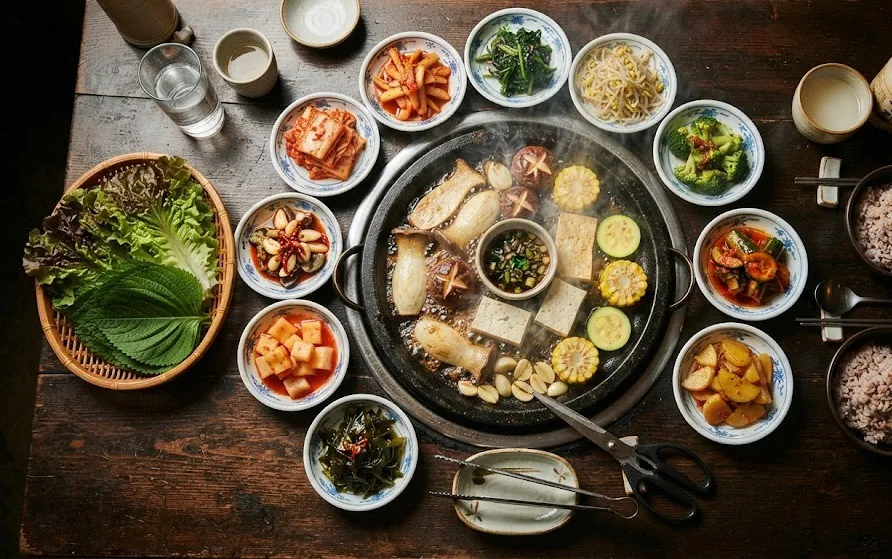
A vegetarian Korean BBQ experience reimagines the interactive, grill-centered dining ritual. It’s not simply Korean food without meat, but a thoughtful adaptation of a centuries-old tradition.
The Core Components: Grill, Banchan, and Ssam
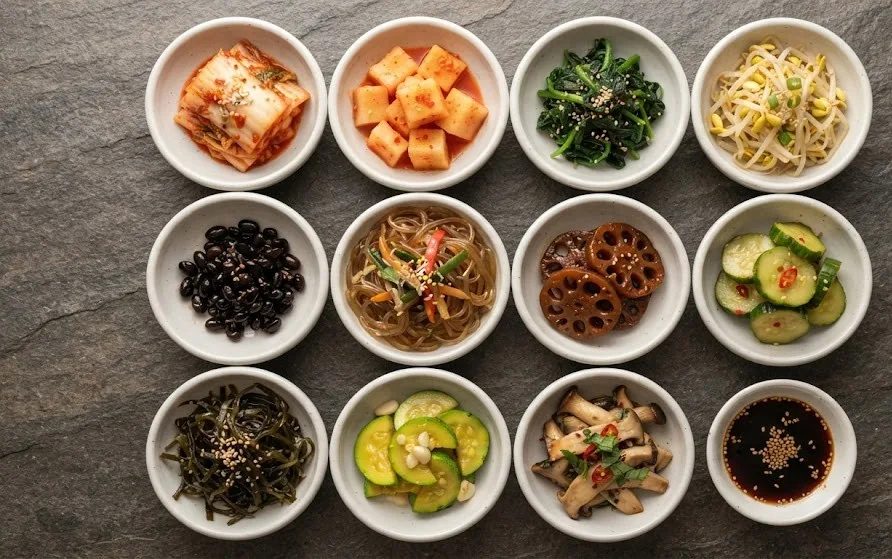
Every Korean BBQ table centers on three key elements: the grill, banchan, and ssam. The grill, typically a gas or charcoal burner, is central to the meal. Surrounding it are banchan—an array of small side dishes like kimchi, pickled radish, seasoned spinach, and bean sprouts. Ssam refers to the lettuce-wrap ritual, where diners combine grilled items, rice, and ssamjang (a savory dipping sauce) into a leafy green for a single bite. In a vegetarian setting, all three components remain, with the protein being the primary change.
Plant-Based Proteins That Replace Beef and Pork
Successful vegetarian Korean BBQ restaurants master plant-based substitutes that perform well on the grill. Gochujang-glazed tofu is a standout, with the fermented chili paste creating a sweet-spicy crust. Mushroom bulgogi, often made with king oyster or shiitake mushrooms, mimics the texture of thinly sliced beef when marinated in soy sauce, pear, and garlic. Some establishments also offer soy-based “meat” alternatives, though many local chefs prefer working with whole ingredients.
How Korean BBQ Restaurants in Da Nang Adapt the Format
Da Nang’s vegetarian Korean BBQ spots adapt the format using local ingredients and preferences. Ssamjang, for example, often incorporates locally produced fermented soybean paste, giving it a distinct character. Many restaurants also incorporate tropical fruits like grilled pineapple and fresh herbs alongside traditional lettuce wraps. This results in a hybrid that respects Korean technique while embracing Vietnamese produce, creating a fusion that feels authentic.
How to Find the Best Vegetarian Korean BBQ Spots in Da Nang
Finding quality vegetarian Korean BBQ in Da Nang requires a strategic approach. The city has numerous Korean restaurants, but not all cater to plant-based diners. This guide offers a practical method for identifying the right establishments.
Neighborhoods to Prioritize: Son Tra, Ngu Hanh Son, and Hai Chau
Begin your search in neighborhoods with a high concentration of Korean expats and tourists. The Son Tra district, particularly the My Khe beach area and An Thuong, boasts the highest density of Korean restaurants, many offering vegetarian options. Ngu Hanh Son, south of the city center, is another hotspot with a growing number of Korean-owned eateries. Hai Chau, the central business district, features more upscale options, including Korean BBQ chains that have introduced vegetarian menus. Streets like Duong Dinh Nghe, Tran Bach Dang, and Vo Nguyen Giap are worth exploring, as they often feature Korean signage and popular eateries.
Reading Menus for Hidden Vegetarian Gems
Look beyond generic menu items to find true vegetarian offerings. Don’t assume a Korean restaurant is vegetarian-friendly simply because it lists tofu. Seek out specific markers like “chay” (Vietnamese for vegetarian) or Korean terms such as “chaesik” (vegetarian) and “sachik” (vegan). If strict vegetarianism is important, inquire directly about preparation methods, as some restaurants share grills and utensils between meat and vegetables. The most dedicated vegetarian Korean BBQ spots in Da Nang are often fully vegetarian or have a separate kitchen section.
Using Local Reviews and Korean-Language Signs as a Signal
Korean-language reviews and signage can be strong indicators of authenticity. A restaurant with a steady stream of Korean customers leaving positive feedback about vegetarian dishes suggests quality and authenticity. Explore Facebook groups like “Expats in Da Nang” and “Vietnam Travel Tips and Planning” for local and traveler recommendations. While Tripadvisor lists Korean restaurants with vegetarian tags, its coverage may be less extensive than for mainstream Vietnamese cuisine.
Signature Plant-Based Dishes to Order at a Korean BBQ Table
When dining at a vegetarian Korean BBQ restaurant in Da Nang, explore beyond grilled items to appreciate the cuisine’s full spectrum. The complete Korean table offers a range of dishes that showcase its depth.
Grilled Tofu and Mushroom Medleys
The centerpiece of any vegetarian Korean BBQ is the grilled protein, with tofu and mushrooms being prime examples. Teriyaki-style grilled tofu, featuring firm slices brushed with a sweet soy glaze, develops a crispy exterior and tender interior on the hot grill. Mushroom medleys, combining king oyster, shiitake, and enoki mushrooms, offer varied textures. Grilling them until slightly charred enhances their umami flavors, providing a satisfying depth.
Kimchi Pancakes and Vegan Jeon
Jeon, or Korean savory pancakes, are essential side dishes. Kimchi jeon, made with fermented napa cabbage, is vegetarian if the kimchi is prepared without fish sauce; many Da Nang restaurants now use vegan kimchi. Other varieties include scallion and zucchini pancakes, crisped on the griddle and served with a soy-vinegar dipping sauce. These are ideal for sharing and provide a textural contrast to grilled items.
Doenjang Jjigae and Other Soup Pairings
A Korean BBQ meal feels incomplete without a bubbling pot of soup. Doenjang jjigae, a hearty stew made with fermented soybean paste, tofu, and vegetables, is a vegetarian staple when prepared without seafood stock. Many Da Nang restaurants also offer kimchi jjigae (kimchi stew) and sundubu jjigae (soft tofu stew), which can be made vegan upon request. These soups pair well with pickled radish and fresh lettuce for a balanced meal.
What to Expect from a Vegetarian Korean BBQ Buffet vs. À La Carte
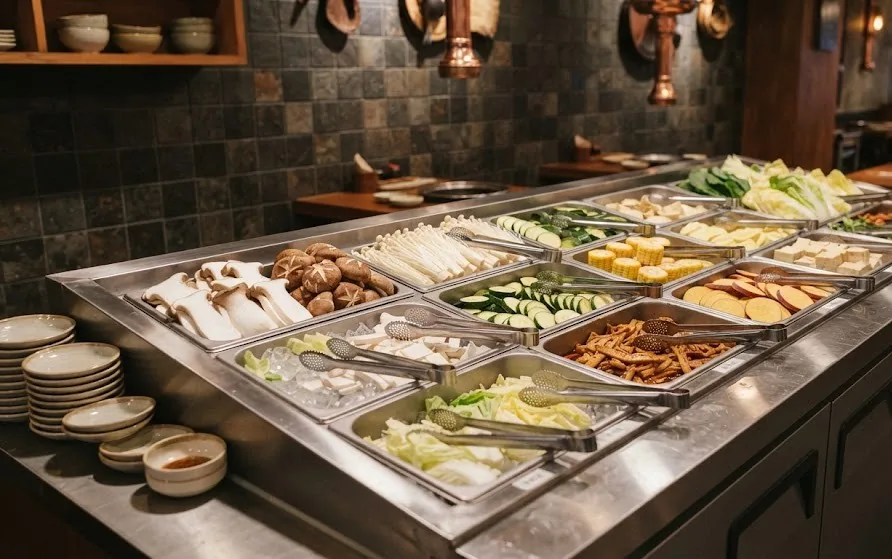
Da Nang’s vegetarian Korean BBQ scene offers two distinct dining formats: buffet and à la carte. Each presents unique advantages based on group size, appetite, and budget.
Buffet Format: Variety, Crowds, and Value
Buffet-style vegetarian Korean BBQ provides excellent value for groups, offering extensive variety. Restaurants like GOYUHAN feature spreads with over 60 dishes, including numerous banchan options, grilled items, soups, and rice dishes. The trade-off is often a lively, crowded atmosphere during peak dinner hours (7–8 PM), which may involve wait times. Buffets typically have a fixed time limit, usually 90 minutes to two hours, which can feel rushed for those who prefer a leisurely dining experience.
À La Carte Format: Quality, Customization, and Quiet
À la carte restaurants offer a more refined and personalized experience. Diners can customize each dish, request specific dietary adjustments, and enjoy a quieter, more intimate setting. The quality of ingredients is often higher, as restaurants charging per dish can invest in premium tofu, fresher mushrooms, and house-made banchan. The primary drawback is the higher cost per person, especially when ordering multiple dishes to achieve buffet-like variety.
Which Format Fits Your Group Size and Budget?
The following table outlines key differences to help you choose the best format.
| Factor | Buffet | À La Carte |
|---|---|---|
| Price per person | Lower (150,000–250,000 VND) | Higher (200,000–400,000 VND) |
| Variety | 60+ dishes, banchan counter with 6–8 daily options | Limited menu, but each dish is carefully prepared |
| Atmosphere | Lively, crowded during peak hours | Quiet, intimate, better for conversations |
| Customization | Limited — offerings are fixed | High — requests for dietary needs can be accommodated |
| Best for | Groups of 4+, large appetites, budget-conscious diners | Couples, small groups, special occasions |
Practical Tips for a Smooth Vegetarian Korean BBQ Visit
A little preparation enhances the vegetarian Korean BBQ dining experience in Da Nang. Here are essential practical considerations.
Booking Ahead for Peak Dinner Hours (7–8 PM)
Popular vegetarian Korean BBQ spots often require advance reservations, especially on weekends. Many restaurants, particularly buffet-style ones, fill up quickly. Calling ahead or using a booking app is recommended to secure a table, especially for the busiest window between 7 and 8 PM. Some upscale establishments also offer private rooms for groups of 10–12, which should be booked well in advance.
Communicating Dietary Needs in Korean and Vietnamese
Confirming dietary requirements is advisable, even at vegetarian establishments. Learning key phrases can be helpful: “toi an chay” (I eat vegetarian) in Vietnamese, and “jeoneun chaesikjuuija imnida” (I am vegetarian) in Korean. For vegans, add “không có trứng và sữa” (no eggs and milk) in Vietnamese. Staff at Korean restaurants in Da Nang are frequently bilingual in Korean and Vietnamese, facilitating clear communication and preventing cross-contamination issues.
Pairing Sides and Sauces to Avoid Cross-Contamination
For strict vegetarians, awareness of shared condiments is important. While ssamjang and gochujang are typically vegan, some restaurants may add fish sauce to their dipping sauces. Requesting separate sauce portions can address concerns. Additionally, confirm that the grill surface is cleaned before cooking vegetarian items, as some hybrid restaurants use the same grill for both meat and vegetables. Fully vegetarian Korean BBQ spots eliminate this concern.
Related on this site
- Vegan & Vegetarian Da Nang: The Complete 2026 Guide
- Da Nang’s Unique Fusion Cuisine: Where East Meets West
- Da Nang Vegetarian Eats: Delicious Plant-Based Delights for 2026
Frequently Asked Questions
Is Korean BBQ traditionally vegetarian?
No, traditional Korean BBQ centers on grilled meat, typically beef or pork. However, the format is well-suited for vegetarian adaptation due to the prevalence of plant-based banchan side dishes, ssam wraps, and sauces. Modern Korean cuisine increasingly incorporates vegetarian and vegan options.
Do vegetarian Korean BBQ restaurants in Da Nang use mock meat?
Some do, but many focus on whole plant-based ingredients like tofu, mushrooms, and vegetables. Mock meats made from soy or wheat gluten are available at certain restaurants, but they are not the standard. It is advisable to inquire directly about the protein options offered.
Is kimchi always vegetarian?
No, traditional kimchi often contains fish sauce or shrimp paste. However, many Korean restaurants in Da Nang now offer vegan kimchi prepared without animal products. If strict vegetarianism is a concern, it’s best to ask before ordering.
What’s the average cost of a vegetarian Korean BBQ meal in Da Nang?
Buffet-style meals typically range from 150,000 to 250,000 VND per person. À la carte dining is generally higher, usually between 200,000 and 400,000 VND, depending on the number of dishes ordered. These prices are comparable to meat-based Korean BBQ in the city.
Are there fully vegetarian Korean BBQ restaurants in Da Nang, or only hybrid spots?
Both types exist. Fully vegetarian Korean restaurants are becoming more prevalent, particularly in the My Khe and An Thuong areas. Hybrid restaurants, which serve both meat and vegetarian options, are more numerous but require careful ordering to ensure a plant-based meal.
Can I find vegan Korean BBQ in Da Nang, or only vegetarian?
Vegan options are available but may require more specific inquiry. Many vegetarian dishes are inherently vegan—such as grilled tofu, mushrooms, and most banchan—but sauces and soups might contain eggs, dairy, or fish sauce. Clearly communicating vegan requirements will help most restaurants accommodate your needs.
Conclusion
Vegetarian Korean BBQ in Da Nang represents a significant culinary movement, reflecting the city’s international character and evolving food culture. The fusion of Korean grilling techniques with local Vietnamese produce offers a dining experience that is both familiar and novel, appealing to vegetarians, vegans, and adventurous meat-eaters alike. To maximize your visit, prioritize the My Khe and An Thuong neighborhoods for the widest selection, book reservations for peak dinner hours, and don’t hesitate to inquire about ingredients and preparation methods. Whether you opt for a lively buffet or a quiet à la carte setting, Da Nang’s vegetarian Korean BBQ scene provides a delicious insight into how global cuisines adapt to local tastes. Exploring classics like gochujang-glazed tofu, mushroom bulgogi, and doenjang jjigae will reveal why this trend is poised to shape Da Nang’s dining landscape through 2026.
Part of our guide to what to eat in Da Nang.